
How Movement Therapy Breaks Through Mental Barriers
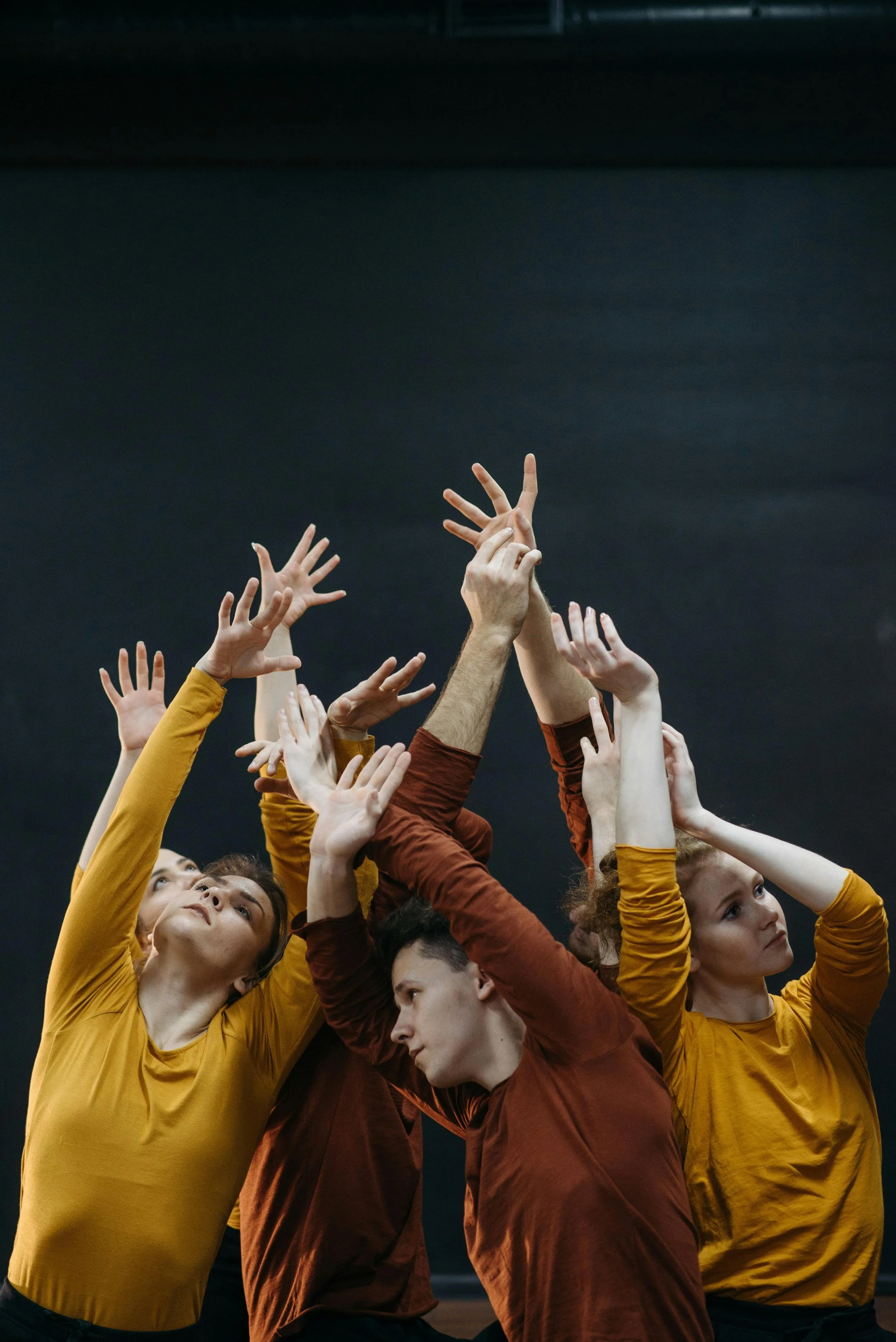
You have talked about it. You have thought about it. You have journaled, meditated (or tried to), and analyzed it from every possible angle. And you are still stuck. Still anxious. Still holding something in your chest, your shoulders, your jaw, your gut that will not let go, no matter how much you understand it.
That is because some things do not live in your thoughts. They live in your body. And your body has been trying to tell you something for a long time.
Why Talking Is Not Always Enough
Let us be clear: talk therapy is powerful. It works. But for some people, in some situations, with some kinds of pain, talking about what happened does not touch what is actually stored in the body. You can intellectually understand that your childhood was hard, that your relationship was toxic, and that your anxiety is not logical. Understanding does not automatically equal release.
Trauma, stress, and anxiety do not just affect your mind. They change the way your muscles hold tension. They alter your breathing patterns. They shift your posture, your gait, the way you take up space in a room. Your nervous system holds the memory of every threat, every heartbreak, every time you had to shut down to survive. And it keeps those memories in your tissue, your breath, your movement patterns, long after the danger has passed.
This is not new-age talk. This is neuroscience. And it is exactly why dance movement therapy exists.
What Dance Movement Therapy Actually Looks Like
Here is what it does not look like: a dance class. Nobody is teaching you choreography. Nobody is expecting you to be graceful, coordinated, or even particularly willing to move. You do not need dance experience. You do not need to be in shape. You do not need to know what you are doing.
Dance movement therapy is a clinical practice facilitated by licensed creative arts therapists who are trained to read and respond to the way your body communicates. A session might look like standing still and noticing where you feel tension. It might look like rocking, swaying, shaking, or walking across a room with intention. It might look like improvised movement that starts small and builds into something you did not expect to feel. It might look like sitting on the floor and breathing.
Ryann Catapano, a licensed creative arts therapist and registered dance/movement therapist at START, describes it this way: the body holds what your mind experiences, and vice versa. Incorporating consistent mind-body practices promotes balance. Is physical and emotional movement in life important? Yes. Is stillness important? Also yes. Together, you explore it all.
Kristie Tavormina, a licensed creative arts therapist (permit) and our newest dance/movement therapist at START, is now seeing clients in person at our West Islip office. If you have been curious about what this work feels like in your body, not just in your head, Kristie is accepting new clients and would love to explore that with you.
The point is not to perform. The point is to reconnect with a body that you may have been disconnected from for years.
Signs Movement Therapy Might Be Right for You
Not everyone lands here. But if any of the following resonate, it might be worth exploring:
Talk Therapy Helped, But Only to a Point
You have done the work. You have sat in the chair, said the hard things, and gained the insight. And it helped, genuinely. But there is something deeper that words cannot reach, something lodged in a place that understanding alone cannot unlock.
Your Body Holds Tension That Nothing Resolves
You have tried stretching, massage, yoga, foam rollers, every physical fix out there. The tension comes right back. That is because it is not just physical. It is emotional weight stored in your muscles, your fascia, and your nervous system, and it needs more than a release. It needs to be heard.
You Feel Disconnected From Your Own Body
Sometimes you forget it exists entirely. You live from the neck up, operating on thoughts and to-do lists, completely checked out from the shoulders down. You bump into things. You ignore hunger signals. You do not notice you are clenching your jaw until someone points it out.
Sitting Still in Therapy Makes Things Worse
You are not being difficult. You are not resistant. Sitting still in a quiet room while someone asks how you feel sends your nervous system into overdrive. You get restless, shut down, or dissociate. You need a therapeutic approach that lets you move instead of freeze.
Your Anxiety Lives in Your Body More Than Your Mind
Tight chest. Stomach in knots. Shallow breathing. Tingling hands. Your anxiety does not announce itself with a thought first. It announces itself with a sensation, and no amount of cognitive reframing touches it because it is not starting in your cognition.
You Process Better by Doing Than by Discussing
You are a creative, a mover, a maker. You have always understood the world through your hands, your body, your rhythm. Talking about feelings in a chair is like asking a musician to describe a song without ever playing it. You need a space that lets you do what you already know how to do.
Talking About Trauma in Detail Feels Overwhelming
The idea of sitting across from someone and narrating your worst experiences in words makes your whole system shut down. That is not avoidance. That is your body telling you it needs a different way in, one that does not require you to verbalize every detail in order to heal.
You Want Tools That Address Both Mind and Body
You struggle with mood and emotion regulation and you have noticed that strategies aimed only at your thoughts leave half the picture unaddressed. You want an approach that honors the full experience, what your mind thinks and what your body feels, at the same time.
If you checked off even one, dance movement therapy deserves a closer look.
The Science Behind Why Movement Heals
Your autonomic nervous system has two main modes: sympathetic (fight or flight) and parasympathetic (rest and digest). When you experience chronic stress, trauma, or anxiety, your nervous system can get stuck in sympathetic overdrive. You are constantly braced for impact, even when there is nothing to brace for. Or it swings the other way, into freeze, where everything shuts down and you feel numb, flat, and unreachable.
Movement therapy works because it speaks the language of the nervous system directly. Rhythmic, intentional movement activates the parasympathetic response and helps your body complete stress cycles it never got to finish. When you were scared and could not run, your body still wanted to. When you were hurt and could not fight, your muscles still tensed for it. Movement therapy gives your body the chance to do what it needed to do but could not at the time.
This is also why movement therapy is so effective for anxiety. Anxiety lives in the body as much as it lives in the mind. The racing heart, the tight chest, the restless legs, the shallow breathing. You cannot think your way out of a physical response. But you can move through it. Literally.
Research supports what our therapists see every day: that body-based interventions reduce cortisol, lower heart rate variability, improve emotional regulation, and increase interoception (the ability to notice and interpret what your body is telling you). For people who struggle with mindfulness practices because sitting still feels impossible, movement provides an active, embodied alternative that accomplishes similar goals through a completely different doorway.
Mental Barriers Movement Therapy Helps Break Through
Sometimes the thing keeping you stuck is not a thought. It is a wall your body built to survive. Here are five common mental barriers that movement therapy helps dissolve:
1. The Freeze Response
You know that feeling where you want to do something, anything, but your body will not cooperate? That blank, heavy, paralyzed sensation? That is freeze, and it is your nervous system's last-resort protection. Movement therapy gently thaws the freeze by starting with micro-movements, small gestures that tell your system it is safe to come back online. No force. No pushing. Just slow, patient re-engagement with aliveness.
2. Emotional Numbness
Numbness is not the absence of feeling. It is the suppression of feeling, and your body is doing the suppressing. Movement therapy bypasses the cognitive gatekeepers that keep emotions locked away and creates space for feelings to surface through the body. Sometimes tears come when you sway. Sometimes rage shows up when you stomp. These are not breakdowns. They are breakthroughs.
3. Chronic Tension and Bracing
If you carry your stress in your neck, your shoulders, your back, or your jaw, your body is literally bracing for impact all the time. That tension is not just physical. It is emotional armor. Movement therapy helps you identify where you hold and why, and then guides you through releasing it in a way that feels safe rather than exposing.
4. Disconnection From Self
Trauma, burnout, and chronic stress can make you feel like a stranger in your own body. You go through the motions but you do not feel present. Dance movement therapy rebuilds that connection one sensation at a time. You start to notice your feet on the floor, your breath moving through your ribs, the weight of your arms. And slowly, you start to feel like you live here again.
5. The Belief That You Are Stuck
Maybe the biggest barrier is the story that nothing can change. That you have tried everything and nothing works. Movement therapy offers a different kind of evidence. When your body experiences something new, when it moves in a way it has not moved before, when it releases something it has been carrying for years, that experience is undeniable. Your body becomes proof that change is possible.
These breakthroughs do not require dramatic moments. They happen in the quiet, small shifts that build over time.
You Do Not Have to Talk Your Way Through Everything
At START, we have always believed that sometimes words are not enough. That is why we exist. Our therapists use art, music, drama, writing, and movement because healing is not one-size-fits-all, and the body deserves to be part of the conversation.
Dance movement therapy is available both in-person at our West Islip location and virtually. You do not need to be a dancer. You do not need to be flexible. You just need to be willing to try something different.
Your body has been holding this for long enough. It is ready to let go. Are you?