
START CREATIVE ARTS THERAPY SERVICES
Creative Therapy for Sensitive Souls in NY
You don't need thicker skin. You need a space that actually honors how deeply you feel.
You've probably been told your whole life that you're "too much." Too emotional. Too sensitive. Too reactive.
And honestly? We get it.
And somewhere along the way, you started believing it. So when someone suggests therapy, your first thought isn't relief, it's dread. Because traditional talk therapy can feel like another space where you're expected to perform, make eye contact on demand, and narrate your pain in perfectly linear sentences while someone across from you scribbles on a notepad.
That doesn't feel safe. It feels like an interrogation.
We actually get it. At START Creative Arts Therapy in West Islip, NY, we built our practice around the belief that healing doesn't have to be verbal, linear, or loud. For highly sensitive people, the nervous system needs a different kind of invitation, one that whispers instead of shouts. Creative arts therapy offers exactly that. Instead of sitting face-to-face dissecting your thoughts, you might paint what words can't capture, move through what your body has been holding, or let music say the thing your throat won't. The creative process becomes the conversation, and you get to set the volume.
Whether you're walking through our doors on Long Island or joining us from anywhere in New York State through telehealth, you'll find a team of over 30 licensed creative arts therapists who specialize in making space for people who feel everything deeply. No fluorescent lights. No pressure to perform. Just a genuinely safe environment where your sensitivity isn't a diagnosis, it's your superpower. And we're here to help you stop surviving it and start living with it.
What is Art Therapy?
Creative arts therapy is a clinically grounded, evidence-based approach to mental health treatment that uses artistic modalities, including visual art, music, dance and movement, as the primary vehicles for expression, processing, and healing.
Unlike traditional talk therapy, which relies heavily on verbal articulation, creative therapy meets you where you are. For highly sensitive people, that often means somewhere beneath language, in the body, in color, in rhythm, in the space between notes. Every session at START is facilitated by a Licensed Creative Arts Therapist (LCAT) trained to guide you through these modalities with clinical precision and genuine human warmth.
Here's what this actually looks like. In art therapy, you might use drawing, painting, collage, or sculpture to externalize emotions that feel too tangled to verbalize. You don't need to be an artist; this isn't about making something beautiful, it's about making something true. In music therapy, sound and rhythm become tools for regulation and release. Whether you're playing an instrument, listening, or using vocal expression, music engages your nervous system in ways that conversation simply cannot. Dance and movement therapy works directly with the body, the place where highly sensitive people often carry the most unprocessed experience. Through guided movement, you explore tension, release, and reconnection with a physical self that may have learned to shut down as a coping mechanism.
What makes these modalities transformative for HSPs is the built-in buffer they create. The art, the music, the movement, they act as an intermediary between you and the overwhelming directness that traditional therapy can impose. You're still doing deep, real therapeutic work. You're just doing it through a medium that respects how your system processes the world. And because START offers individual therapy sessions both in-person at our West Islip, NY location and via telehealth across New York State, you get to choose the environment that feels safest, your therapist's studio or your own living room.
Let Your Sensitivity Lead the Way
How Art Therapy Benefits You
Creative arts therapy offers unique benefits that traditional talk therapy alone may not provide:
-
For highly sensitive people, the expectation to verbalize every emotion in real time can feel less like therapy and more like a performance under pressure. Your nervous system is already working overtime processing the room, the therapist's tone, the eye contact, the silence between questions. Adding "now explain exactly what you're feeling" on top of that? It's a recipe for shutdown, not breakthrough.
Creative arts therapy at START flips that script entirely. When you work with art, music, or movement, you're given a non-verbal entry point into your inner world. You don't have to find the "right" words, you can let a brushstroke, a drumbeat, or a gesture carry the weight instead. This isn't a workaround or a watered-down version of "real" therapy. Research consistently demonstrates that creative modalities access emotional and somatic material that talk therapy often can't reach, particularly for individuals with heightened sensory and emotional processing.
For our clients across New York, whether in-person in West Islip or through telehealth, this means sessions that feel less like being put on the spot and more like being given permission to process at the pace and in the language your system actually speaks. Your LCAT will guide the experience with clinical expertise, but the creative medium does the heavy lifting of expression. You get to show up as you are, not as the most articulate version of yourself. And honestly? That's where the real healing lives. In the messy, wordless, beautifully honest space between what you feel and what you create.
-
Here's something most traditional therapy approaches miss: for highly sensitive people, the body is often where the story lives. You might intellectually understand your triggers, your patterns, your history. You could narrate your trauma timeline with impressive clarity. But your nervous system? It's still bracing and still scanning. Still holding tension in your shoulders, your jaw, your gut. Talking about it doesn't always convince your body that it's safe.
Dance and movement therapy at START works directly with that somatic experience. Through guided movement, nothing choreographed, nothing performative, you begin to notice where your body stores stress, how it responds to perceived threats, and what it needs to release. Your LCAT creates a space where your physical experience is honored as valid clinical information, not just a side effect of being "too sensitive." This is especially powerful for HSPs because your sensory processing is heightened. You feel temperature shifts, emotional energy in a room, subtle changes in tone, your body is an incredibly sophisticated instrument, and movement therapy treats it as one.
For Long Island and New York State clients, this modality is available both in our West Islip studio, designed to be a calm, low-stimulation environment, and through telehealth, where you can move in the comfort and privacy of your own space. Many HSPs actually find virtual movement sessions less activating because they eliminate the sensory overwhelm of traveling to a new location. Either way, your therapist meets you exactly where your body is, not where a treatment protocol thinks it should be. The result is a deeper sense of safety, regulation, and ownership over a nervous system that's been running the show from behind the scenes.
-
Every therapist says their space is safe. It's practically a requirement on the website. But for a highly sensitive person, "safe" is not a buzzword, it's a physiological experience. Your system knows the difference between a space that claims to be safe and a space that actually feels safe. Fluorescent lighting, a crowded waiting room, a therapist who pushes too fast, these aren't minor inconveniences for you. They're barriers to accessing your own healing.
At START, we designed our entire practice model with this reality in mind. Our West Islip location on Long Island is intentionally crafted to be low-stimulation and warm, a space where the environment itself communicates that you can exhale. Our team of over 30 licensed creative arts therapists is trained in trauma-informed, person-centered care, which means the pace of your therapy is never dictated by a rigid protocol. It's dictated by you. If you need to spend three sessions just getting comfortable in the room, that's not a delay; that's the work.
And for highly sensitive clients who find even the act of leaving home overstimulating, our telehealth option, available to anyone in New York State, removes that barrier entirely. You can engage in art therapy from your kitchen table, explore music therapy from your bedroom, or do a movement session in your living room. The therapeutic container travels to you. What matters isn't where you are, it's that wherever you are, you feel held, seen, and unhurried. That's not a tagline for us. It's the baseline. Because you can't do deep work in a space your nervous system doesn't trust, and we refuse to pretend otherwise.
-
Not every HSP processes the world the same way, so why would one therapeutic approach work for everyone? Some of you are visual, you see emotions in color, texture, and shape before you could ever name them. Others are auditory, you feel everything through sound, resonate with music on a cellular level, and find that a melody can crack you open faster than any conversation. And some of you live in your body first, you feel the shift before you think the thought, and movement is your mother tongue.
START offers art therapy, music therapy, and dance and movement therapy because we believe you deserve options that match how you actually experience the world. During your initial sessions, your LCAT will explore which modalities resonate most with your processing style. And here's the thing, it might change. Some sessions might call for paint. Others might call for rhythm. That flexibility isn't indecisiveness; it's responsiveness. It's your therapist paying attention to what you need right now, not what a textbook prescribed.
This matters profoundly for highly sensitive people in New York because you've likely spent years trying to fit yourself into therapeutic models that weren't built for your wiring. You sat in talk therapy and felt like you were failing because you couldn't "just say how you feel." You tried CBT worksheets and they felt reductive. You're not broken and those approaches aren't bad, they just weren't speaking your language. At START, whether you're sitting in our West Islip studio or logging in from anywhere in the state, the modality adapts to you. Not the other way around. That distinction changes everything.
-
There's a particular kind of therapeutic harm that doesn't get talked about enough: the damage done by well-meaning therapists who move too fast. For highly sensitive people, being pushed to "go deeper" before you're ready doesn't create breakthroughs, it creates shutdowns. Your system has very good reasons for its protective strategies, and bulldozing past them in the name of progress is counterproductive at best and re-traumatizing at worst.
Individual therapy at START is built on a different philosophy. Your LCAT understands that your sensitivity means you need more time to feel safe, more space to process between sessions, and more permission to say "not yet." This isn't coddling, it's clinical sophistication. Trauma-informed care recognizes that the relationship between therapist and client is the foundation of all healing work, and for HSPs, that foundation takes longer to build because your system is more discerning about who it trusts. That's not a flaw. That's intelligence.
In practice, this means your therapist will check in with you frequently about pacing. They'll notice when your body language shifts before you do and adjust accordingly. They won't interpret silence as resistance, they'll understand it as processing. And they'll celebrate the small victories that other approaches might overlook, because for a sensitive person, showing up is already an act of enormous courage. Whether your individual sessions happen in person at our West Islip, Long Island location or online through our New York State telehealth platform, the commitment is the same: we go at the speed of trust. Period.
-
Let's be honest, for a lot of highly sensitive people, the hardest part of therapy isn't the therapy itself. It's everything surrounding it. The commute through traffic. The unfamiliar parking lot. The waiting room with its harsh lighting and someone else's perfume and a TV playing the news at a volume that's somehow both too quiet and too loud. By the time you sit down with your therapist, your nervous system is already activated. You're spending the first twenty minutes just trying to regulate from the journey there.
Online therapy through START eliminates all of that. When you log in from your own space, your bedroom, your studio, your favorite corner of the couch, you start the session already in an environment your system knows and trusts. You control the lighting, the temperature, the sounds, the smells. For an HSP, that level of environmental agency isn't a luxury; it's a clinical advantage. You arrive at the session resourced instead of depleted, which means you can go deeper, faster, with less recovery time afterward.
And before you wonder, no, online creative arts therapy is not a diluted version of in-person work. Our LCATs are experienced in facilitating art therapy, music therapy, and movement therapy through telehealth with full clinical rigor. You might use art supplies at home, engage with music through your speakers, or explore movement in your living room. The screen becomes a window, not a wall. For highly sensitive people across New York State, from Long Island to upstate, from the boroughs to the Hudson Valley, telehealth with START means you never have to choose between accessibility and depth. You get both.
Our Services
Art Therapy
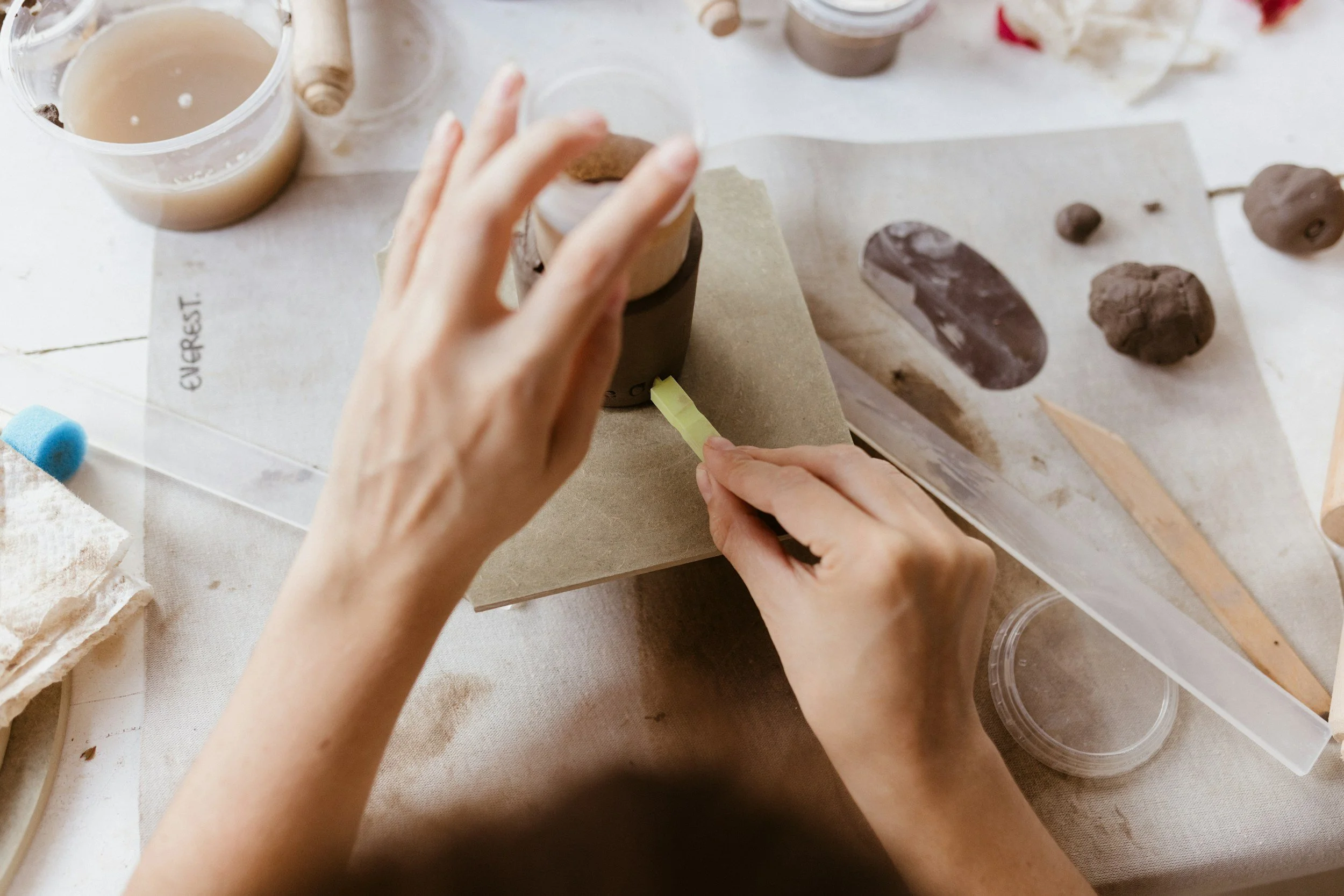
Art therapy uses visual media, drawing, painting, collage, sculpture, and mixed media as the primary tools for emotional expression and psychological exploration. For highly sensitive people, art creates a tangible buffer between internal experience and external communication. You don't need artistic skill or experience. Your LCAT guides the creative process, helping you externalize and transform emotions that feel too complex for words. Available in-person in West Islip and via telehealth across New York State.
Music Therapy
Music therapy harnesses the power of sound, rhythm, melody, and vocal expression to support emotional processing and nervous system regulation. For HSPs whose auditory processing is heightened, music can access emotional material with remarkable precision and gentleness. Sessions may involve playing instruments, listening exercises, songwriting, or vocal exploration, all guided by a licensed therapist. Particularly effective for individuals who find verbal processing overwhelming or reductive.
Dance and Movement Therapy
Dance and movement therapy engages the body as the primary site of healing, no choreography or dance experience required. Through guided movement, breathwork, and somatic awareness, you explore how your body holds stress, processes emotions, and communicates what words cannot. For highly sensitive people who carry sensation and emotion physically, this modality offers a direct path to regulation and release. Available in-studio and through telehealth movement sessions.
EMDR Therapy Eye Movement
Desensitization and Reprocessing (EMDR) is a trauma-focused therapy that helps your brain reprocess distressing memories, so they lose their emotional charge. At START, EMDR is often integrated with creative arts approaches to create a powerful, multimodal healing experience. You don't have to talk through every detail to move through it.
Our Process
STEP ONE
Reach Out and Let Us Know You're Interested
You don't need to have it all figured out before you contact us. Send us an email at support@startcreativearts.com or call (631) 867-2501 and simply say you're curious about creative therapy for sensitive people. That's enough. Our team will respond with warmth, not a sales pitch, and help you understand what the next step looks like. If you have insurance through CIGNA or Health First, we'll let you know how to verify your benefits before your first session. No pressure. No timeline. Just an open door whenever you're ready to walk through it.
STEP TWO
Get Matched with a Therapist Who Actually Gets It
Not every therapist is the right fit for every person, and for HSPs, fit matters even more. Based on your initial conversation with our team, we'll connect you with a Licensed Creative Arts Therapist whose modality, style, and energy align with what you need. Whether you're drawn to art, music, movement, or aren't sure yet, we'll help you find your match. You'll choose between in-person sessions at our West Islip, Long Island studio or telehealth from anywhere in New York State. The choice is yours, and either option delivers the same depth of care.
STEP THREE
Your First Session | No Agenda, Just Connection
Your initial session is about one thing: safety. Your LCAT will take time to learn about you, how you process, what overwhelms you, what helps you feel grounded, and what you're hoping for. There's no expectation to dive deep or produce anything. You might explore some materials, listen to some sounds, or simply talk about what brought you here. Think of this session as your therapist learning your language so they can speak it with you going forward. It's the foundation, and we don't rush foundations.
STEP FOUR
Build Your Creative Therapeutic Practice
As trust develops and your comfort grows, your sessions will evolve into a genuine creative therapeutic practice. Your LCAT will introduce modalities and exercises tailored to your goals, processing anxiety, working through past experiences, building emotional regulation, or simply developing a deeper relationship with yourself. Some weeks will feel expansive. Some will feel quiet. Both are valid. The creative process mirrors life; it's not linear, and it doesn't need to be. What matters is that you're doing it in a space that respects every part of who you are.
Our Approach
At the core of everything we do at START is a fundamental belief: creativity is the original language of healing.
Long before humans had clinical terminology or diagnostic manuals, we were drawing on cave walls, drumming around fires, moving our bodies to process grief and joy and everything in between.
Creative expression isn't an alternative to "real" therapy; it is real therapy. It's the oldest form of it. And for highly sensitive people, it's often the most effective, because it meets you in the place where your experience actually lives: beneath the intellect, in the body, in image and sound and motion.
Our approach is trauma-informed, person-centered, and strengths-based, which, in plain language, means we see your sensitivity as a strength, not a symptom. We don't pathologize your depth. We don't try to toughen you up or "build resilience" by pushing you past your limits. Instead, we work with your nervous system, honoring its wisdom and its boundaries, using creative modalities as the bridge between where you are and where you want to be. Every LCAT on our team, and there are over 30 of us, is trained to hold space for people who feel deeply, process slowly, and need more gentleness than the average therapeutic model provides.
What this looks like in practice is radically individualized care. We don't run HSPs through a standardized protocol. We listen, with our eyes, our intuition, and our clinical training, and we respond to what's actually happening in the room (or on the screen, for our telehealth clients). Some sessions are quiet and internal. Some are vibrant and cathartic. Some involve making things. Some involve sitting in silence. All of them are guided by licensed professionals who understand that for a sensitive person, the relationship is the intervention. The creative modality is the vehicle. And your pace is the only pace that matters.
This philosophy extends to how we've built our physical and virtual environments. Our West Islip studio is designed to be a sensory sanctuary, warm, calm, and intentionally low-stimulation. And our telehealth platform means clients anywhere in New York State can access this care without the sensory cost of travel. Because we believe that where you heal matters, and for highly sensitive people, that "where" needs to feel like a place where your whole self is welcome.
✔ All START therapists are Licensed Creative Arts Therapists (LCATs) or LP-CATs supervised by a licensed therapist in New York State
✔ Founded in 2020; team of 30+ licensed clinicians
✔ In-network with CIGNA and Health First
✔ Serving all of New York State via telehealth
✔ Trauma-informed, person-centered, and neurodiversity-affirming practice
✔ Specializing in creative arts therapy modalities: art, music, dance/movement, drama, and writing therapy
FREQUENTLY ASKED QUESTIONS
Common Questions About Art & Dance Movement Therapy
START Creative Arts Therapy Services was founded in 2020 by Dina Palma, LCAT, in West Islip, New York, and has grown to a team of over 30 licensed creative arts therapists serving all of New York State. We specialize in treating stress, trauma, and anxiety through art, music, dance and movement, drama, and writing therapy, creative modalities that meet people where words can't.
-
Not even a little. Creative arts therapy is not about talent, technique, or making something that looks good. It's about using the creative process as a tool for expression and healing. Your LCAT guides the experience, you don't need to know how to draw, play an instrument, or dance. You just need to show up willing to explore. Some of the most powerful therapeutic breakthroughs happen with a single mark on a page or a simple movement.
-
Traditional talk therapy relies primarily on verbal processing, direct conversation, and sustained eye contact, all of which can be overstimulating for HSPs. Creative arts therapy introduces an intermediary (art, music, movement) that allows you to express and process emotions without the pressure of constant verbalization. This creates a gentler, more regulated therapeutic experience that works with your sensitive nervous system instead of inadvertently activating it.
-
Absolutely. START offers telehealth creative arts therapy to clients throughout New York State, and our LCATs are experienced in facilitating art, music, and movement sessions virtually. Many HSP clients actually prefer online sessions because they eliminate the sensory overstimulation of travel and unfamiliar environments. You can use your own art supplies, instruments, or open space at home. The therapeutic depth is the same; the setting is simply more controlled by you.
-
START is in-network with CIGNA and Health First. We recommend verifying your specific benefits before your first session, as coverage can vary by plan. Our team can help guide you through this process. Just call (631) 867-2501 or email support@startcreativearts.com, and we'll help you figure out the logistics so you can focus on what matters.
-
That's completely normal, and honestly, it's part of the process. During your initial sessions, your LCAT will explore different modalities with you to discover what resonates. Some people are drawn to visual art immediately. Others find music or movement more natural. Many clients use a combination that shifts based on what they need. There's no wrong answer, and your therapist will help you find your way in at whatever pace feels right.
Your Sensitivity Deserves This
Reach out to explore how creative therapy can honor the way you experience the world.