
How Music Therapy Helps You Find Your Voice
Your voice is stuck. Maybe literally, you struggle to speak up or express what you need. Maybe metaphorically, you've lost touch with who you are and what you want. Maybe both. You've been quiet for so long, accommodating everyone else's needs, that you're not sure you remember what it feels like to take up sonic space, to be heard, to matter enough to make noise.
Music therapy isn't about becoming a musician or learning to sing on key. It's about using sound, rhythm, and musical expression to access parts of yourself that words can't reach. It's about finding your voice when talking hasn't worked, when your throat closes up every time you try to express something important, when the thing you need to say lives somewhere language doesn't go.
So let's talk about how music therapy actually works, why it helps when other approaches haven't, and how sound can help you reclaim your voice after years of being silenced or silencing yourself.
Why Music Reaches What Words Can't
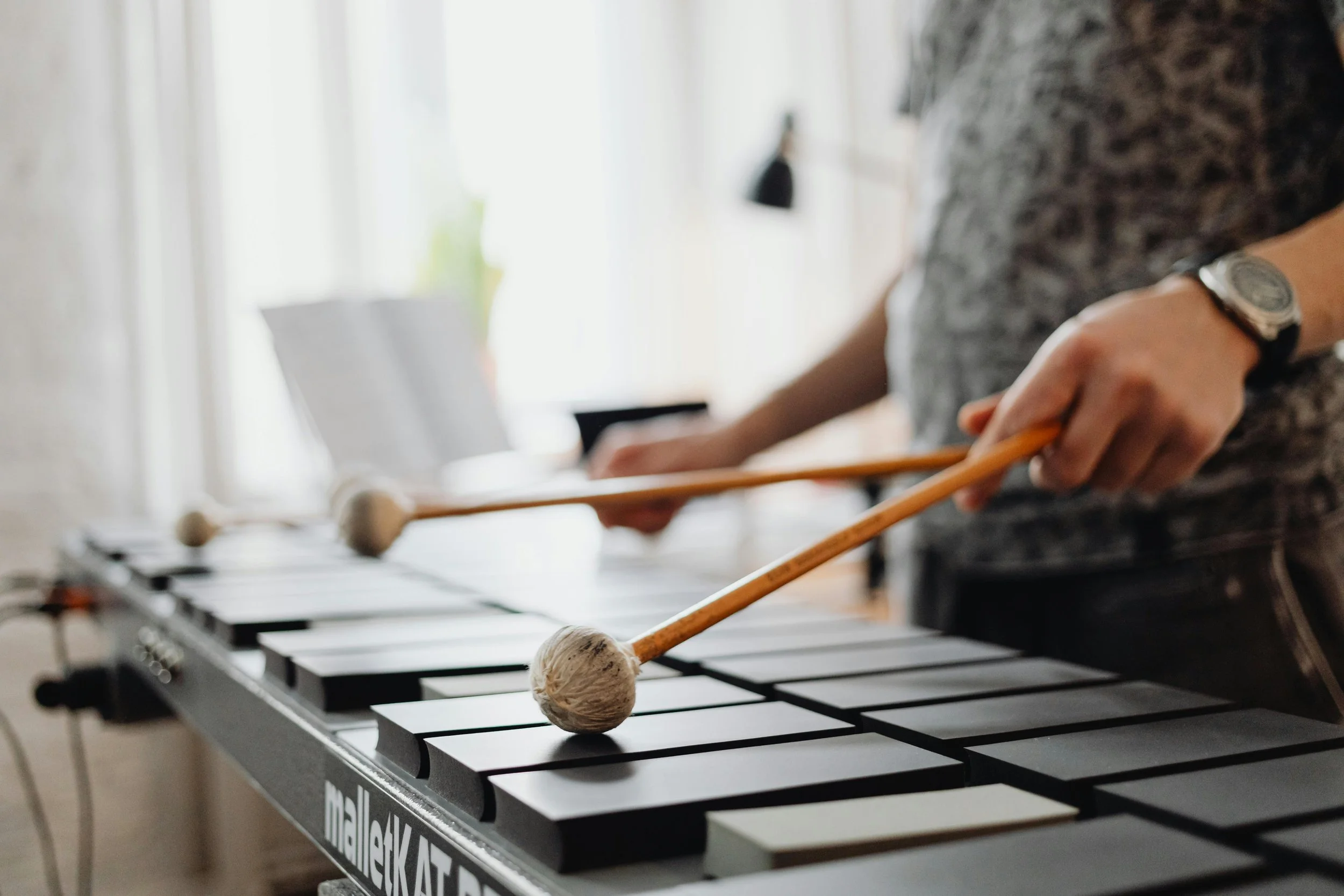
Language lives in your thinking brain, the part that analyzes and censors and worries about saying things wrong. Music lives deeper. It accesses emotion, memory, and expression that exist below conscious thought. When you're stuck trying to find the right words, when talking about your experience feels impossible or insufficient, music offers another pathway.
Rhythm regulates your nervous system. Melody carries emotion without requiring you to name it. Harmony creates connection without words. Making sound, even just humming or tapping, reminds your body that you're allowed to exist audibly, that taking up space with noise is permitted, that your voice matters even if it's just sound and not sentences.
For people who've been told to be quiet, who learned that their voice wasn't welcome, who internalized that their needs weren't worth expressing, music therapy offers permission to be heard without having to articulate perfectly what you're trying to say. You don't need the right words. You just need to make sound, and the sound itself is expression, is release, is reclaiming your right to be audible.
What Music Therapy Actually Looks Like
Let's get specific about what happens in music therapy, because it's not what most people imagine. You're not performing. You're not being evaluated on musical skill. You're using sound as a tool for expression, exploration, and healing.
Improvisation without judgment
You make music spontaneously, responding to how you feel in the moment, without worrying about whether it sounds "good." The process matters more than the product.
Songwriting to tell your story
You create lyrics and melody that capture your experience, giving voice to things you haven't been able to say in regular conversation.
Listening and processing
You engage with music that resonates with your emotional state, using songs as a way to access and understand feelings that have been buried.
Rhythm and regulation
You use drumming or other rhythmic instruments to regulate your nervous system, to move through activated states, and to ground when you're dissociated.
Vocal work for expression
You explore making sound with your voice, from humming to toning to actual singing, reclaiming your right to be heard after years of being quiet.
Music therapy meets you where you are. If you're activated and need to move energy, rhythm helps. If you're shut down and need to access emotion, melody opens doors. If you're trying to make sense of your story, songwriting gives structure. You don't need musical training. You just need the willingness to engage with sound as a therapeutic tool.






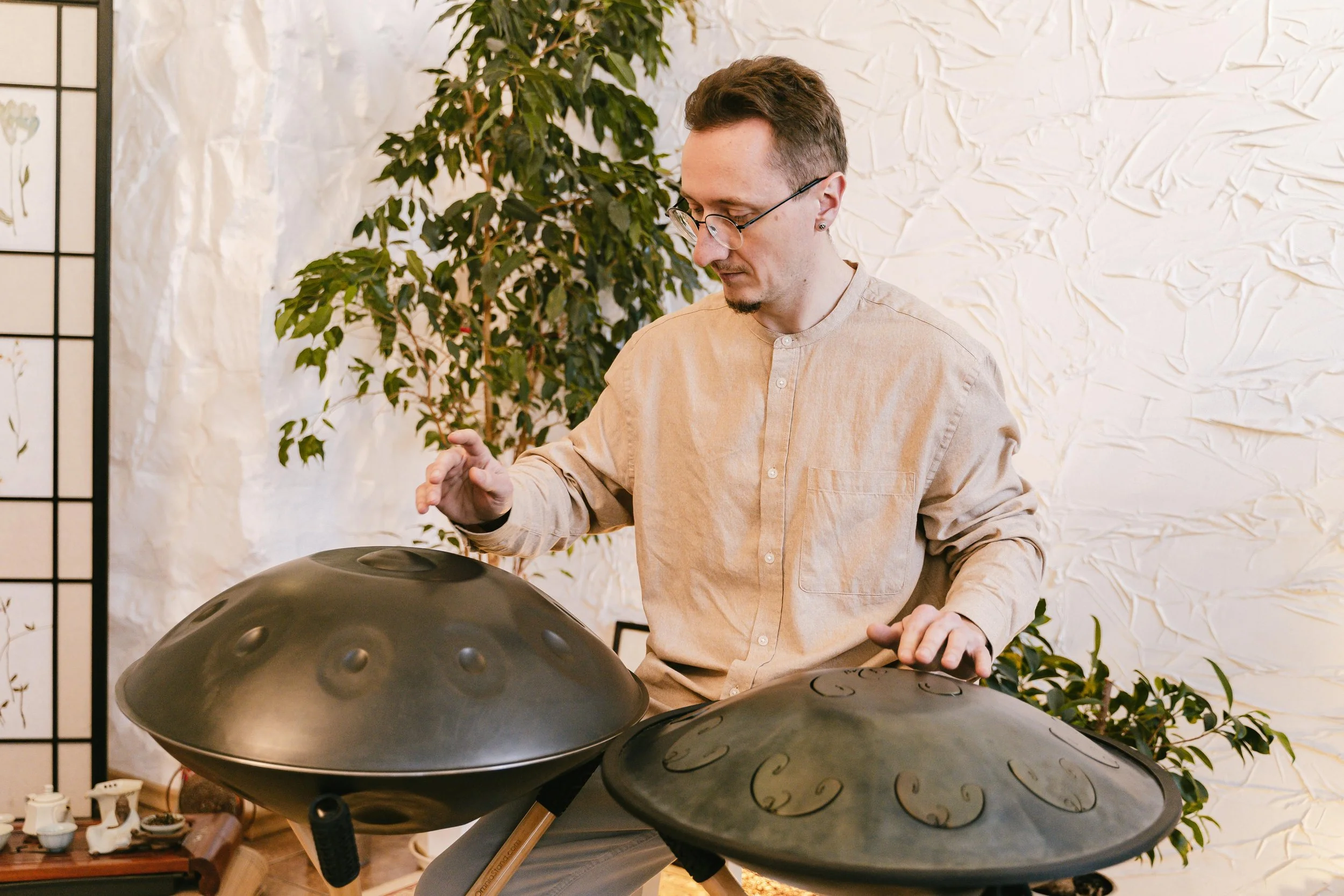
The Difference Between Music Therapy And Music Class
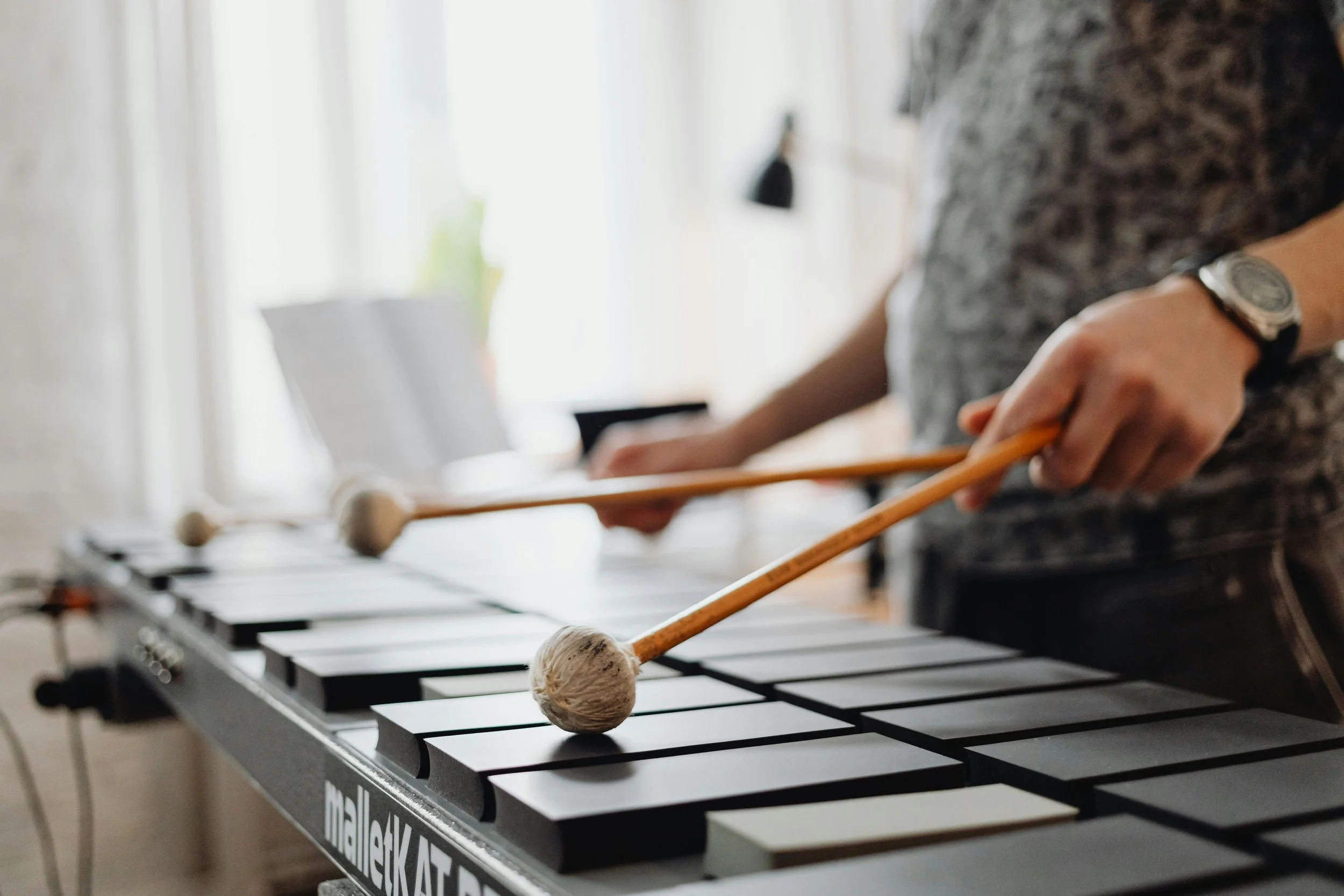
Music class evaluates your performance. Music therapy uses your expression. Music class cares about technique, accuracy, staying on beat, and sounding good. Music therapy cares about what you're communicating, what you're processing, and how the music is serving your healing. There's no wrong note in music therapy because the point isn't perfection, it's expression.
If you learned early that you're not musical, that you can't carry a tune, that you should just mouth the words during group singing, music therapy isn't for you, right? Wrong. Because those messages were about performance, not about your inherent capacity to use sound therapeutically. Everyone has rhythm (it's your heartbeat). Everyone has a voice. Everyone can benefit from musical expression as a therapeutic modality, regardless of training or natural talent.
The goal isn't to make you a musician. The goal is to help you access parts of your experience that language can't reach, to give you another tool for regulation and expression, to help you find your voice when words have failed or feel too dangerous. Individual therapy can incorporate music even if music isn't the primary modality, because sometimes one session of improvisation unlocks something that months of talking couldn't access.
Why Sound Helps You Reclaim Your Voice After Silence
If you've been silenced, literally or figuratively, if you learned that your voice wasn't welcome or safe, if expressing yourself led to punishment or dismissal, making sound can feel terrifying. Your throat might tighten. Your voice might shake. The mere act of being audible might activate shame or fear.
Music therapy works with that resistance gently. You don't have to start by speaking. You can start with rhythm, with an instrument, or with humming. You can make sounds that aren't words, that don't require you to articulate anything specific, that just remind your body it's allowed to exist audibly. As you get comfortable making sounds in ways that feel safe, you can gradually work toward using your literal voice, toward expressing needs, toward reclaiming the right to be heard.
For people who experience anxiety around speaking up, music therapy offers a way to practice expression without the pressure of perfect articulation. For people healing from trauma where their voice was literally or metaphorically stolen, music therapy helps reclaim that voice incrementally, at a pace that feels manageable rather than overwhelming.
What Actually Changes When You Use Music Therapeutically
When you engage with music therapy, you're not just learning an instrument or improving your singing. You're changing your relationship with expression, with being heard, with taking up space.
1. You access emotions you couldn't name
Music bypasses your thinking brain and goes straight to feeling, helping you connect with emotions that have been stuck or buried.
2. You practice being heard
Making sound in a therapeutic space where your expression is valued teaches your nervous system that being audible is safe.
3. You regulate your nervous system
Rhythm and melody help move you between activated and calm states, giving you tools for managing anxiety, anger, or shutdown.
4. You find language for your experience
Sometimes creating music about your experience helps you find words you couldn't access before, or replaces the need for words entirely.
5. You reclaim joy in expression
If making sound has been associated with judgment or performance anxiety, music therapy helps you reconnect with the inherent pleasure of musical expression.
The goal isn't to become a performer. The goal is to use sound as a tool for healing, for regulation, for expression, for reclaiming your voice after years of being quiet or being told your voice didn't matter.
When Music Therapy Makes Sense For You
Music therapy is particularly effective for people who struggle with verbal expression, who have experienced trauma that lives in their body more than their conscious memory, who need tools for nervous system regulation, who feel stuck in talk therapy and need a different approach. It's also valuable for people who are already musically inclined and want to use that strength therapeutically.
If you've been in therapy talking about the same issues for months without progress, if you struggle to articulate what you're feeling, if your trauma is preverbal or body-based, if you need help regulating when you're activated, music therapy offers approaches that work with your nervous system and your expressive capacity in ways talking alone can't.
You don't need to identify as creative or musical to benefit. You just need to be willing to engage with sound as a therapeutic tool, to explore expression beyond words, to give your voice, literal and metaphorical, a chance to emerge in ways it hasn't been able to before. Art therapy works similarly, using visual expression when words aren't enough.
The bottom line: Your voice, literal or metaphorical, might be stuck after years of being silenced or silencing yourself. Music therapy helps you find it again through sound, rhythm, and musical expression that bypasses language and goes straight to what needs to be expressed. You don't need to be musical. You don't need perfect pitch. You just need the willingness to make sound, to be heard, to reclaim your right to exist audibly. Music reaches what words can't, and sometimes what you need to say only makes sense as melody, as rhythm, as sound that isn't sentences but is still somehow exactly right.