
How Drama Therapy Puts You Back in the Lead Role
Somewhere along the way, you stopped being the main character in your own story. Maybe it happened slowly. Maybe someone else's voice got louder than yours and you just let it. Maybe the role you've been playing, the good daughter, the dependable friend, the person who holds it all together, was never one you auditioned for in the first place. It was assigned to you, and you've been stuck in it ever since.
Drama therapy is the modality that says: the show isn't over, and you get to rewrite the script.
What Drama Therapy Actually Is (And What It Isn't)
Let's clear something up right away. Drama therapy is not an acting class. It's not improv night at a comedy club. It's not about memorizing lines, performing for an audience, or being "good" at theater. You don't need to have ever set foot on a stage.
Drama therapy is a licensed, evidence-based therapeutic modality that uses theatrical techniques like role play, improvisation, storytelling, puppetry, and embodied exploration to support emotional healing, personal growth, and self-discovery. It's facilitated by registered drama therapists who are trained to hold space for the complex, messy, beautiful things that happen when someone steps into a story and finds themselves in it.
Think of it less like performing and more like playing. The way kids do. Where you try on different versions of yourself, practice saying the thing you've been swallowing, and explore what it feels like to take up space in a room without apologizing for it.
Why the Body Needs to Be in the Room
Traditional talk therapy is a conversation between your mind and your therapist. Drama therapy brings your whole body into the work. That matters, because so much of what holds us back doesn't live in our thoughts. It lives in our posture, our breath, our instinct to freeze when we need to speak, our habit of making ourselves physically smaller when someone takes over a conversation.
When you stand up, move, use your voice, and physically occupy space in a session, you're not just talking about change. You're rehearsing it. Your nervous system gets to practice what it feels like to be assertive, to be visible, to be powerful, before you have to do it in real life. That's not a metaphor. That's neuroscience. The body learns through experience, and drama therapy gives your body the experiences it needs to rewrite old patterns.
This is part of what makes creative arts therapy so effective for people who have felt stuck in traditional approaches. When words aren't enough, the body and the imagination pick up where language leaves off.



The Roles You Never Chose
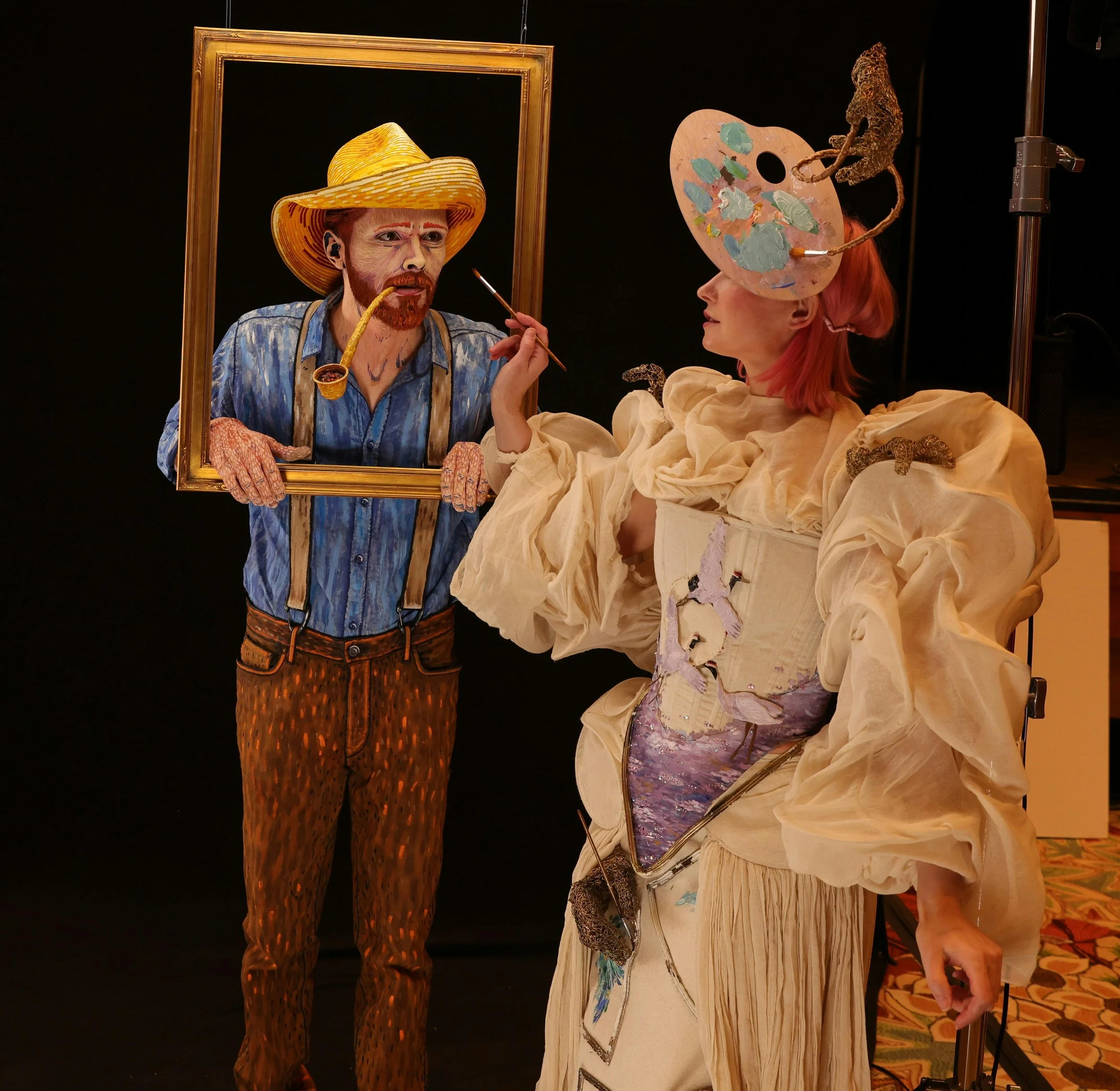
Here's a truth that doesn't get said enough: most of us are walking around playing roles that were cast for us by other people. Your family gave you a part. Your school gave you a part. Your culture, your community, your relationships, all of them handed you a script and expected you to follow it.
The fixer. The quiet one. The strong one. The one who never needs anything. The one who keeps the peace at all costs.
These roles might have kept you safe at one point. They were survival strategies. But at some point, the role that protected you becomes the cage that traps you. You forget that there are other parts available. You forget that you're allowed to improvise.
Drama therapy helps you see those roles clearly, understand where they came from, and decide which ones still serve you and which ones you're ready to put down. It gives you the opportunity to literally step out of the old character and try on a new one, in real time, in a space where it's safe to experiment.
5 Ways Drama Therapy Helps You Reclaim Your Story
Drama therapy is one of the most versatile and underestimated modalities in the mental health field. Here are five specific ways it helps people step back into their own lives:
1. Rehearsing Difficult Conversations
Have a conversation you've been avoiding? A boundary you need to set? Something you need to say to your boss, your partner, or your parent? In drama therapy, you can practice it first. Role play lets you try different approaches, find your words, and feel what it's like to actually say the thing, so when the real moment comes, your body already knows the way.
2. Externalizing What's Been Trapped Inside
Sometimes the hardest part of healing is getting the internal stuff out where you can look at it. Drama therapy gives form to the formless. You can personify your anxiety, give a voice to the part of you that's been silent, or create a character that represents the version of yourself you're growing into. Externalizing these experiences creates distance, and distance creates clarity.
3. Processing Trauma Without Narrating It
Like EMDR, drama therapy offers a way to process traumatic experiences without requiring you to retell the story in detail. Through metaphor, movement, and embodied storytelling, you can explore what happened from a safe distance. You might work through your experience using a fairy tale, a myth, or a character you create, letting the drama hold what feels too heavy to hold directly.
4. Discovering Parts of Yourself You've Buried
We all have parts of ourselves that got shut down along the way. The bold part. The playful part. The angry part. The creative part. Drama therapy creates a space to invite those parts back in, to give them room to breathe and speak, without judgment. You might be surprised by who shows up when you stop performing and start playing.
5. Building Confidence Through Embodiment
Confidence doesn't come from thinking confident thoughts. It comes from the felt experience of being confident in your body. Drama therapy lets you practice standing tall, using your voice, occupying space, and making choices, all in a supportive environment. Over time, what starts as "acting" starts to feel like truth. Because it is.
Each of these approaches can be tailored to what you're working through, whether that's grief, relationship dynamics, identity exploration, or simply reconnecting with who you are underneath all the roles.
"But I'm Not a Theater Person"
You don't have to be. Seriously. Drama therapy isn't for actors. It's for humans. If you can play pretend, you can do drama therapy. If you can tell a story, you can do drama therapy. If you've ever imagined what you would say to someone if you had the chance, congratulations, you've already done a version of it in your head.
The most powerful drama therapy sessions often happen with people who have never been on a stage, who would never call themselves performers, who might even say they hate being the center of attention. That's part of what makes it so transformative. You don't have to be comfortable with it yet. You just have to be willing to try.
At START, our drama therapists meet you exactly where you are. If you want to start with something small, like storytelling or guided imagery, we start there. If you want to dive into role play, we'll hold the space. The pace is always yours.
Taking Back the Lead
You've spent long enough playing a supporting character in your own story. Following someone else's script. Hitting marks that were set for you before you were old enough to protest. Drama therapy is the space where you get to step out of the wings and back onto the stage of your life, not to perform for anyone, but to finally, fully, be yourself.
It's not about being dramatic. It's about being real. It's about using the tools of story, imagination, voice, and body to reconnect with the version of you that's been waiting in the wings.
Our team at START includes registered drama therapists who specialize in exactly this kind of work, both in-person in West Islip and online across New York. If you're ready to stop reading from someone else's script and start writing your own, let's talk.
The lead role has always been yours. It's time to step into it.