
START CREATIVE ARTS THERAPY SERVICES
You Don't Need Talent. You Need a Marker.
Art therapy isn't about making something pretty. It's about making something real. No skills required, just show up.
Let's get this out of the way: "I'm not creative" is the number one thing people say before they back out of trying art therapy.
And honestly? We get it.
Somewhere along the way, maybe in second grade when someone laughed at your drawing, maybe yesterday when you tried to sketch something and immediately crumpled it up, you decided you weren't an "art person." That story stuck.
And now the idea of sitting in a room with a therapist and making something feels more terrifying than the thing you actually need help with.
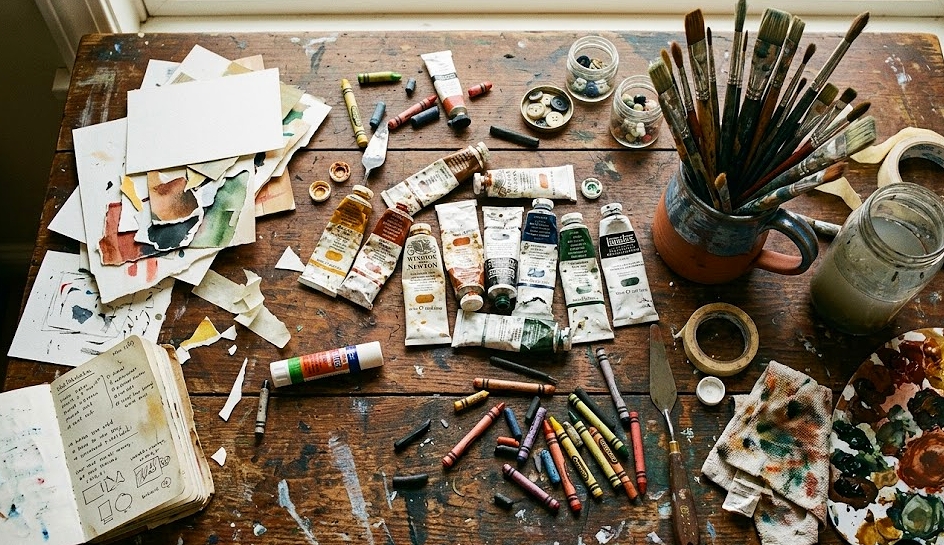
Here's the truth nobody tells you: art therapy was never about art skills. Not even a little. At START Creative Arts Therapy in West Islip, NY, we work with adults every single day who walk in saying, "I can literally only draw stick figures." Great. Stick figures count. Scribbles count. Ripping paper into tiny pieces and gluing them back together counts. The art is the vehicle, not the destination. What matters is what comes up while your hands are busy, what surfaces when you stop overthinking and start doing. That's where the healing lives.
And here's why that matters right here on Long Island: you're busy. You're stressed. You've probably been told to "just talk to someone" a dozen times, and maybe traditional talk therapy felt like sitting in a chair narrating your problems without anything actually shifting. Art therapy gives you a different way in, one that bypasses the part of your brain that wants to intellectualize everything and goes straight to the stuff that words can't always reach. You don't need to be artistic. You need to be willing to pick up a marker and give yourself permission to be messy. We'll handle the rest.
What is Art Therapy?
Art therapy is a form of psychotherapy that uses creative expression, drawing, painting, sculpting, collage, mixed media, and more as the primary tool for communication, self-exploration, and healing.
It's facilitated by Licensed Creative Arts Therapists (LCATs) who are trained in both clinical psychology and artistic process. At START, every art therapist on our team holds this dual expertise, which means they're not teaching you how to make art. They're using art to help you understand yourself.
Here's how it actually works in session: your therapist might invite you to choose colors that represent how you're feeling, build something out of found materials, or respond to an image that resonates with you. There's no "right" way to do any of it. Sometimes you'll talk while you create. Sometimes you won't talk at all, and the art does the talking for you. The process is entirely guided by what you need in that moment, not by technique, not by talent, and definitely not by what it looks like when you're done. Your therapist reads the process, not the product. How you approach the materials, what you avoid, where you hesitate, all of that is information. Rich, clinical, deeply useful information that opens doors that traditional talk therapy sometimes can't.
You can access art therapy at START through individual therapy sessions tailored to your specific needs, or through group therapy where shared creative experiences build connection with others navigating similar challenges. Sessions are available in-person at our West Islip, Long Island location and via telehealth for anyone in New York State. We're in-network with CIGNA and Health First, and our team can help you verify your benefits before your first session so there are no surprises.
The outcomes speak for themselves: reduced anxiety, healthier emotional regulation, trauma processing that doesn't require you to verbally relive every detail, and a relationship with yourself that actually feels like yours. Adults across Long Island and throughout New York are discovering that the thing standing between them and healing was never a lack of artistic ability; it was the belief that they needed it in the first place.
Curious About Art Therapy?
How Art Therapy Benefits You
Creative arts therapy offers unique benefits that traditional talk therapy alone may not provide:
-
Here's something that might blow your mind: your art therapist at START is not looking at what you made and grading it. They're not secretly thinking, "Wow, that tree looks terrible." They're watching how you made it. Did you press hard with the crayon or barely touch the paper? Did you fill the whole page or stay in one tiny corner? Did you pick bold colors or reach for the same muted tone every time? That's the data. That's where the therapeutic gold is.
This is called process-oriented therapy, and it's the foundation of everything we do. In traditional talk therapy, you narrate your experiences and your therapist listens for patterns, contradictions, and breakthroughs in your words. In art therapy, that same clinical observation happens, but through your creative choices. The materials become an extension of your inner world, and your therapist is trained to read that language fluently.
For adults on Long Island juggling demanding careers, family obligations, and the particular brand of stress that comes with living in one of the most expensive regions in the country, this approach is a game-changer. Many of our clients tell us they spent years in talk therapy circling the same issues because they're really good at intellectualizing their problems. They know exactly what's wrong. They can articulate it perfectly. But knowing and feeling are two different things. Art therapy gets underneath the narrative you've rehearsed and accesses the raw, unedited version, the one that actually needs attention.
So no, it doesn't matter if your painting looks like a kindergartener made it. What matters is what it felt like to make it. And what your therapist sees in those choices that you might not see yet. -
You know that feeling when someone asks, "How are you?" and you say "fine" while your jaw is clenched, your shoulders are up by your ears, and your stomach is in knots? That disconnect between what you say and what you feel is exactly where art therapy does its best work.
When you engage in a creative process, moving paint across paper, tearing fabric, pressing your hands into clay, you're activating parts of your brain that verbal conversation alone can't reach. Trauma, stress, and anxiety often live in the body and in the nonverbal brain. They're stored as sensations, images, and impulses, not as neatly organized sentences. This is neuroscience, not woo-woo. Research consistently shows that creative expression activates the limbic system and can help process experiences that are pre-verbal or too overwhelming to articulate.
For adults who've tried talk therapy and felt like they were just going through the motions, or for people who've never tried therapy at all because the idea of "talking about your feelings" makes you want to crawl out of your skin, this is your way in. START's Licensed Creative Arts Therapists understand the clinical science behind why making something with your hands can unlock what sitting in a chair and talking cannot.
And here's the thing: this isn't niche or experimental. Creative arts therapy is an established, evidence-based treatment modality recognized across New York State. Every therapist at START is licensed and trained to use these approaches with clinical precision. You're not doing arts and crafts. You're doing real, transformative therapeutic worK, it just happens to involve a paintbrush instead of a clipboard.
-
When was the last time you let yourself be bad at something? Not mediocre-but-improving. Not "I'm a beginner but here's my naturally gifted first attempt." Just genuinely, unapologetically bad at something, and let that be okay?
For most adults, the answer is: not recently. Maybe not ever. We live in a performance culture. Everything is optimized, curated, and posted for approval. Long Island, in particular, carries its own flavor of this: the pressure to have it together, look like you have it together, and never let anyone see the mess behind the curtain. That pressure doesn't just live in your social life. It follows you into therapy. It makes you want to "do therapy right," give the correct answers, and have the appropriate breakthroughs on schedule.
Art therapy at START flips that script entirely. When you sit down with materials and your therapist says, "There's no wrong way to do this," they mean it. And something remarkable happens when you actually believe them: you stop performing. You stop editing. You start being honest, maybe for the first time in a long time. The freedom to make something ugly, weird, incomplete, or nonsensical is therapeutic in itself. It's practice for the bigger, scarier act of letting yourself be imperfect in the rest of your life.
Our clients on Long Island and across New York consistently tell us that this was the unexpected gift of art therapy, not a beautiful painting to hang on their wall, but the experience of creating without judgment. Of being seen in their mess and met with compassion instead of critique. That's what START is built for.
-
One of the biggest fears people have about therapy, especially trauma therapy, is that they'll have to sit there and recount every painful detail of what happened to them. For some people, that fear alone is enough to keep them from ever making the call. We actually get it. And we want you to know: art therapy offers another way.
When you work with a creative arts therapist at START, the art becomes a container for your experience. Instead of narrating your trauma verbally, you might express it through color, shape, movement, or metaphor. This creates a degree of distance, what clinicians call "aesthetic distance", that makes it possible to explore painful material without being retraumatized by it. You're not in the memory. You're looking at a representation of it, and your therapist is right there beside you, guiding the process with clinical expertise.
This is especially powerful when combined with other modalities we offer at START, like EMDR therapy, which also works to reprocess traumatic memories without requiring you to verbalize every detail. Our team is trained across multiple approaches, so your treatment is never one-size-fits-all. For adults across Long Island dealing with complex trauma histories, grief, postpartum challenges, or the accumulated weight of chronic stress, this matters. You deserve a path to healing that doesn't feel like punishment.
Art therapy lets you approach your hardest stuff sideways, through image, symbol, and creative expression, so you can process it without being consumed by it. That's not avoidance. That's smart, compassionate, evidence-based care.
-
You know who you are. You've got a script. You walk into a room, any room, including a therapist's office, and you perform the version of yourself that makes everyone comfortable. You minimize. You deflect with humor. You give the "right" answers because you've already thought about what the therapist probably wants to hear. And then you leave feeling exactly the same as when you walked in.
Art therapy disrupts that pattern because art doesn't care about your script. You can't intellectualize a scribble. You can't people-please a piece of clay. The materials respond to what you're actually feeling, not what you think you should be feeling. And a skilled creative arts therapist at START knows how to read the difference.
This is why art therapy is particularly effective for high-functioning adults, the ones who "seem fine" but are quietly falling apart. On Long Island, we see this constantly. Professionals who are crushing it at work but can't sleep. Parents who hold everything together for their kids but have nothing left for themselves. People who've been told they're "so strong" so many times that they've forgotten they're allowed to not be.
If you've been in talk therapy before and felt like you were just performing wellness instead of actually experiencing it, art therapy at START might be the shift you need. It gets past the defenses you've spent a lifetime building, not by tearing them down, but by finding a door you didn't even know was there. Your therapist isn't trying to outsmart you. They're giving you a way to outsmart the part of you that won't let you be vulnerable.
-
We know that showing up is sometimes the hardest part. That's why START offers art therapy both in-person at our West Islip, Long Island location and through telehealth for adults anywhere in New York State. Whether you're ten minutes away or upstate, you can access the same quality of care with the same licensed creative arts therapists.
For in-person sessions, our space is designed to feel like anything but a doctor's office. It's warm, creative, and intentionally un-clinical, because we believe your environment matters as much as your treatment plan. Our West Islip office at 248 Higbie Lane is easily accessible for adults throughout Suffolk County, Nassau County, and the greater Long Island area.
For online sessions, we've adapted our art therapy approach to work beautifully in a virtual setting. Your therapist will guide you on simple materials to have on hand, we're talking stuff you probably already own or can grab at any dollar store. No fancy supplies required. No art store anxiety. Telehealth art therapy is ideal for adults with demanding schedules, limited transportation, childcare constraints, or anyone who simply feels more comfortable creating in their own space.
START is in-network with CIGNA and Health First, and we encourage you to verify your benefits before your first session. Our support team at (631) 867-2501 or support@startcreativearts.com can help you navigate the insurance piece so you can focus on what matters, actually getting started.
Our Services
Art Therapy (Individual)
Art therapy at START pairs you with a Licensed Creative Arts Therapist for one-on-one sessions tailored entirely to your needs. Using drawing, painting, collage, sculpture, and mixed media, your therapist helps you explore emotions, process experiences, and build coping strategies, all without requiring a single ounce of artistic talent. Sessions are available in-person in West Islip or via telehealth across New York State.
Individual Therapy
Beyond art-specific modalities, START offers individual therapy integrating Cognitive-Behavioral Therapy (CBT), EMDR, Solution-Focused Therapy, and somatic approaches. Your therapist works with you to identify patterns, challenge beliefs that no longer serve you, and build a life that actually feels like yours. Every treatment plan is personalized, because you are not a diagnosis.
Online Therapy (Telehealth)
Virtual sessions bring START's full range of creative arts therapy to adults anywhere in New York State. Your therapist guides you through art-based and traditional therapeutic approaches using simple, accessible materials. Telehealth is ideal for busy schedules, limited mobility, or anyone who wants quality mental health care from the comfort of home.
Group Therapy
START's group therapy sessions create space for shared creative experience and genuine human connection. Guided by a licensed therapist, groups explore common themes, anxiety, grief, identity, and relationships through collaborative and individual art-making. It's community, support, and healing in one room. No artistic experience required. Just willingness to show up.
EMDR Therapy Eye Movement
Desensitization and Reprocessing (EMDR) is a trauma-focused therapy that helps your brain reprocess distressing memories so they lose their emotional charge. At START, EMDR is often integrated with creative arts approaches for a powerful, multi-modal healing experience. You don't have to talk through every detail to move through it.
Our Process
STEP ONE
Reach Out | It Takes 30 Seconds, Not 30 Minutes of Courage
Getting started is simpler than you think. Call us at (631) 867-2501, email support@startcreativearts.com, or use our online scheduling tool to request a free consultation. You don't need to have your thoughts organized or your "story" ready. Just tell us you're interested in art therapy, and we'll take it from there. Our team will ask a few basic questions about what you're looking for and help you figure out the right fit, including whether in-person in West Islip or telehealth works best for you.
STEP TWO
Free Consultation | Ask Us Anything (Seriously, Anything)
Your free consultation is a low-pressure conversation, not an intake session, not a commitment, and definitely not a test. This is your chance to ask every question you have, including "Do I really not need to know how to draw?" (Yes, we hear it constantly. No, you really don't.) You'll learn how art therapy works at START, what a typical session looks like, and how our Licensed Creative Arts Therapists approach treatment. We'll also help you verify insurance benefits with CIGNA, Health First, or discuss other options.
STEP THREE
Your First Session | Show Up as You Are
Your first art therapy session is about connection, not production. Your therapist will introduce you to materials, explain the process, and invite you to explore at your own pace. There is no assignment. There is no expectation. You might draw, paint, tear paper, or just sit with the materials and see what happens. Your therapist is reading the process, not judging the product.
STEP FOUR
Build Your Practice | Healing Isn't Linear, & That's Okay
Over the following weeks, you and your therapist develop a rhythm. Some sessions might feel like breakthroughs. Others might feel quiet. Both are valuable. Your treatment plan evolves with you, incorporating different materials, techniques, and therapeutic approaches as your needs shift. Whether you're in individual or group sessions, the creative process deepens over time. You don't need to "get better" on a timeline. You just need to keep showing up.
Our Approach
At START, we believe that creativity is a language, and everyone speaks it, whether they know it or not.
You don't need to identify as "creative" or "artistic" to benefit from creative arts therapy. You just need to be human.
Our approach is rooted in the understanding that healing doesn't always happen through words. Sometimes it happens through color, texture, movement, sound, and the simple act of making something with your hands. We meet you where you are, not where you think you should be.
Our clinical philosophy is person-centered, trauma-informed, and strengths-based. That means we don't start by cataloging everything that's wrong with you. We start by recognizing what's already working: your resilience, your instincts, your desire to be here reading this page right now. From there, our Licensed Creative Arts Therapists integrate evidence-based approaches including art therapy, Cognitive-Behavioral Therapy, EMDR, Solution-Focused Therapy, and somatic techniques. No single modality is forced on anyone. Your therapist collaborates with you to find the approach, or combination of approaches, that actually fits your life, your brain, and your goals.
We're also fiercely anti-stigma. START was founded in March 2020 by Dina Palma, LCAT, who built this practice on the belief that therapy should feel like a place you want to go, not endure. That ethos runs through everything we do, from the way our West Islip space is designed to feel warm and un-clinical, to the way our team of 30+ licensed clinicians shows up for every client. We challenge outdated rules about what therapy "should" look like because those rules keep people from getting help.
For adults on Long Island and across New York, this matters more than ever. The stress is real. The anxiety is real. The pressure to perform, produce, and pretend is relentless. START offers something different: a space where you can stop performing and start healing with a marker, a scrap of paper, and a therapist who actually gets it.
✔ All START therapists are Licensed Creative Arts Therapists (LCATs) or LP-CATs supervised by a licensed therapist in New York State
✔ Founded in 2020; team of 30+ licensed clinicians
✔ In-network with CIGNA and Health First
✔ Serving all of New York State via telehealth
✔ Trauma-informed, person-centered, and neurodiversity-affirming practice
✔ Specializing in creative arts therapy modalities: art, music, dance/movement, drama, and writing therapy
FREQUENTLY ASKED QUESTIONS
Common Questions About Art & Dance Movement Therapy
START Creative Arts Therapy Services is a licensed mental health practice in West Islip, New York, founded in 2020 by Dina Palma, LCAT. With a team of 30+ licensed clinicians specializing in art, music, dance/movement, drama, and writing therapy, plus EMDR, CBT, and other evidence-based approaches, START serves adults, adolescents, and children across Long Island and all of New York State via telehealth.
-
Really and truly, no. Art therapy at START is not an art class. There's no technique to learn, no skill to master, and absolutely nothing to "get right." Our Licensed Creative Arts Therapists focus entirely on your creative process, not the product. Stick figures, scribbles, color blobs, torn paper, all of it is valid, all of it is therapeutic. The only requirement is the willingness to try. If you can hold a crayon, you can do art therapy.
-
An art class teaches you skills. A paint night gives you a fun evening. Art therapy is a clinical treatment facilitated by a licensed therapist trained in both psychotherapy and the creative process. At START, your LCAT uses art-making as a tool to help you explore emotions, process trauma, manage anxiety, and build healthier patterns. Every session is guided by therapeutic goals specific to you, it's real mental health treatment that happens to use creative materials.
-
START is in-network with CIGNA and Health First. We recommend verifying your specific benefits before your first session, and our team is happy to help you navigate that process. Contact us at (631) 867-2501 or support@startcreativearts.com, and we'll walk you through it.
-
Both! We offer in-person art therapy sessions at our West Islip, Long Island location (248 Higbie Lane) and telehealth sessions for adults anywhere in New York State. For virtual sessions, your therapist will guide you on simple, affordable materials to have on hand, nothing fancy, nothing intimidating. Many of our clients find telehealth art therapy surprisingly effective and prefer creating in the comfort of their own space.
-
That's completely okay, and we'd never pressure you to continue something that doesn't feel right. START offers multiple therapeutic modalities, including talk therapy, EMDR, dance/movement therapy, music therapy, drama therapy, and writing therapy. If art therapy isn't your thing, your therapist will help you explore other approaches. The goal is finding what works for you, not fitting you into a box.
Your Healing Doesn't Require Talent.
Schedule a free consultation and find out how art therapy at START works, no artistic experience necessary. Just you.