
START CREATIVE ARTS THERAPY SERVICES
Music Therapy for Mood Disorders in New York
Your playlist already knows what you're feeling. Now imagine what a licensed therapist can do.
You already use music to cope. You know you do.
And honestly? We get it.
The playlist you built for the car when everything feels heavy. The song you play on repeat when the crying won't stop. The way you put headphones on and disappear because the world is too loud, too fast, too much. Music has been doing emotional work for you for years, maybe your whole life.
But here's the thing: there's a massive difference between coping and healing. And that difference? It's what happens when a licensed music therapist actually guides you through it.
At START Creative Arts Therapy in West Islip, NY, music therapy isn't background noise. It's not a Spotify mood playlist or a meditation app with piano loops. It's a clinical, evidence-based practice led by Licensed Creative Arts Therapists who use rhythm, melody, improvisation, songwriting, and intentional listening to help you process what words alone can't reach. For people living with depression, bipolar disorder, emotional dysregulation, or mood instability, music bypasses the part of your brain that overthinks and rationalizes, and goes straight to the part that feels. That's not poetic exaggeration. That's neuroscience.
Whether you're on Long Island and can walk through our doors, or you're anywhere in New York State connecting through telehealth, this work meets you where you are. Not where some textbook says you should be. You don't need to know how to play an instrument. You don't need to carry a tune. You just need to show up. We actually get it, and we've got the tools to help you turn the music you already love into the medicine you didn't know you needed.
What is Music Therapy?
Music therapy at START is a structured, therapeutic process facilitated by a Licensed Creative Arts Therapist who specializes in using musical interventions to address emotional, psychological, and neurological needs.
This is not a jam session. It's not background ambiance while you talk about your week. It's an active, intentional clinical practice where music becomes the primary vehicle for exploring, expressing, and transforming emotional experience. For people dealing with depression, bipolar disorder, or chronic emotional dysregulation, music therapy offers a pathway that traditional talk therapy sometimes can't, because music accesses the limbic system directly, shifting mood, activating memory, and regulating the nervous system in real time.
Sessions may involve both active and receptive techniques. Active music therapy means you're creating, drumming, improvising on instruments, writing lyrics, using your voice. You don't need training or talent. The act of creating sound externalizes internal experience in a way that's immediate and visceral. Receptive music therapy involves guided listening, where your therapist selects or co-selects music and helps you process the emotional responses that arise. Both approaches are tailored to your unique goals, whether that's stabilizing mood swings, processing grief that lives in your body, or building a daily emotional regulation practice that actually sticks.
Your therapist works with you to identify patterns, what triggers dysregulation, what soothes it, and how specific musical elements like tempo, key, dynamics, and lyrics interact with your nervous system. Over time, you develop a personalized toolkit of musical strategies you can use inside and outside of sessions. This isn't abstract. It's practical, grounded, and built around your life.
Music therapy at START is available as individual therapy, and it integrates seamlessly with our other modalities, including EMDR, CBT, and additional creative arts therapies. We serve clients in-person at our West Islip, Long Island, location and via telehealth across New York State, making this work accessible no matter where you are.
Discover How Music Therapy Regulates Your Mood
How Music Therapy Benefits You
Creative arts therapy offers unique benefits that traditional talk therapy alone may not provide:
-
You've probably tried to explain how you feel and come up completely empty. Or maybe you've said all the right words in therapy and still left feeling like nothing shifted. That's not a failure on your part. It's a limitation of language. Music operates differently. It activates the amygdala, hippocampus, and prefrontal cortex simultaneously, areas of the brain responsible for emotion, memory, and decision-making. When you play a drum, hum a melody, or listen to a piece of music with therapeutic intention, your brain responds on a neurochemical level. Dopamine releases. Cortisol drops. Your heart rate syncs with rhythm.
For people in New York navigating depression or bipolar disorder, this matters enormously. Mood disorders aren't just about feeling sad or cycling between highs and lows, they involve dysregulated brain chemistry. Music therapy provides a non-pharmacological intervention that works alongside medication and talk therapy to support neurological regulation from the inside out. Research consistently demonstrates that structured music interventions reduce depressive symptoms, improve emotional awareness, and enhance overall mood stability.
At START, our Licensed Creative Arts Therapists understand the neuroscience behind what they do. They're not guessing. They're using specific musical elements, tempo changes to shift arousal states, harmonic tension and resolution to process emotional conflict, rhythmic grounding to activate the parasympathetic nervous system, with clinical precision. The result? You feel the shift before you can even name it. And that's the point. Healing doesn't always start with understanding. Sometimes it starts with a sound.
-
You already consume music. You consume it on your commute, in the shower, while you're doom-scrolling at 2 AM. And that consumption does something; it shifts your mood, numbs pain, and provides company when you feel alone. But consumption is passive. It's receiving. And while receptive music therapy has its place (we use it too), there's something profoundly different that happens when you create.
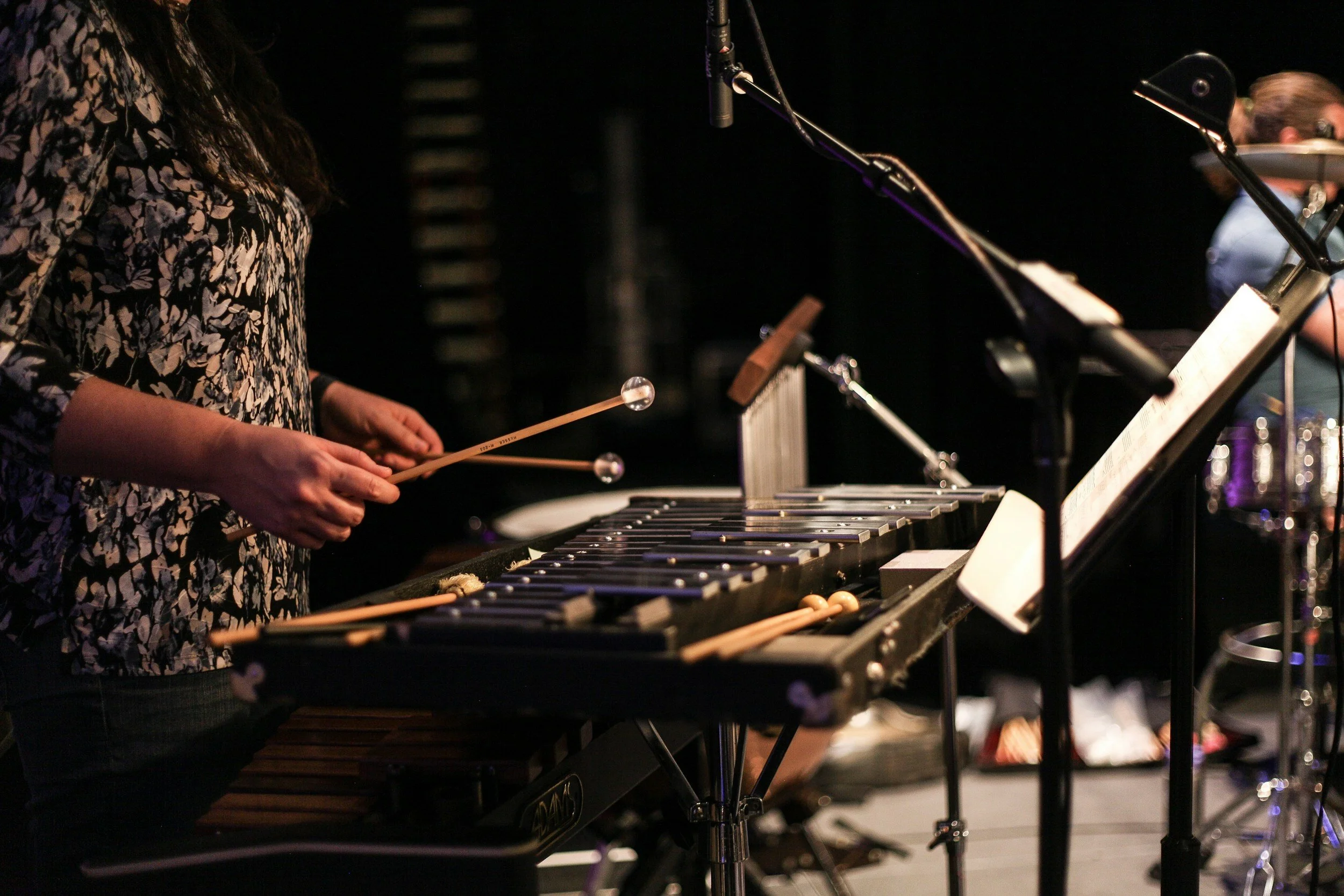
Active music-making in therapy, drumming, improvising on a xylophone, writing lyrics, singing, even just shaking a tambourine, engages your body, your voice, your breath, and your choices. It gives you agency over your emotional expression in a way that sitting and talking sometimes doesn't. For people with emotional dysregulation, this is transformative. Instead of being hijacked by a wave of anger or despair, you channel it into sound. You externalize it. You hear it outside of yourself. And when your therapist reflects it back, restructures it, or helps you reshape it musically, something shifts. You realize: I can move through this. I am not stuck.
Our therapists at START guide this process with care and expertise, adapting every session to what you need that day. Some days it's loud. Some days it's quiet. Some days you're writing a song about the thing you've never said out loud. None of it requires musical skill. All of it requires showing up, and we make that part as easy as possible, whether you're coming to our West Islip studio or joining from anywhere in New York via telehealth.
-
Therapy that only works inside the therapy room isn't enough. You know that. You've maybe experienced that. You leave feeling good, and then Tuesday hits and you're right back in the spiral. Music therapy builds differently because the tools are inherently portable. A rhythm. A song. A breathing pattern set to a beat. A playlist you co-created with your therapist that's designed to pull you out of a depressive dip or ground you during a manic escalation. These aren't abstract coping strategies scribbled on a worksheet. They're lived, embodied, and already wired into your memory.
Your music therapist at START works with you to develop a personalized emotional regulation toolkit rooted in music, specific songs for specific states, rhythmic exercises for grounding when anxiety spikes, and vocal techniques that activate your vagus nerve and calm your nervous system in real time. These are strategies you can use on the Long Island Rail Road, in your kitchen, at 3 AM when sleep won't come. They're yours. They travel with you.
For people managing mood disorders across New York State, this portability is everything. Life doesn't pause for your healing schedule. You need interventions that work in the moments that matter, not just during the fifty minutes you're on a therapist's couch. Music therapy gives you that because music is already woven into your daily life. We're just helping you use it with intention, precision, and a deeper understanding of what your nervous system actually needs. That's the difference between a coping mechanism and a genuine practice. We help you build the practice.
-
Here's something most people don't know: your nervous system wants to sync with rhythm. It's called entrainment, and it's why your heart rate slows when you hear a steady drumbeat, why rocking a baby works, why that one song makes you feel held even though nobody's touching you. Rhythm is the most primal form of regulation humans have, and for people whose nervous systems are chronically dysregulated by depression, anxiety, or bipolar disorder, it's an incredibly powerful therapeutic tool.
In music therapy sessions at START, rhythmic interventions are used intentionally. Your therapist might guide you through drumming at a specific tempo designed to down-regulate your fight-or-flight response. Or they might use rhythmic variation to help you practice tolerating shifts, because mood disorders often involve difficulty with transitions, and learning to stay present through a tempo change is a microcosm of learning to stay present through an emotional one. This is somatic work, body-based and immediate. You don't have to think your way through it. You feel it.
For clients on Long Island and throughout New York State, this kind of intervention is especially valuable when traditional approaches have felt incomplete. If you've been in talk therapy and still feel like your body holds onto everything your mind has processed, rhythmic music therapy bridges that gap. It's not a replacement for your existing treatment. It's the missing piece. Our licensed music therapists are trained to integrate this seamlessly into a treatment plan that honors where you've already been and meets you exactly where you are right now.
-
Let's be honest. If you're reading this page, music already means something to you. Maybe it's the only thing that gets you out of bed some mornings. Maybe you've got a playlist called something like "when it's bad," and you know exactly when to press play. That instinct? It's valid. It's smart. It's your nervous system telling you what it needs. But there's a difference between reflexively hitting shuffle when you're in crisis and using music as a structured, intentional therapeutic practice. One keeps you surviving. The other helps you actually heal.
Music therapy at START takes the relationship you already have with music and deepens it with clinical expertise. Your therapist helps you understand why certain songs affect you the way they do, what's happening in the music structurally, and what's happening in your brain and body when you hear it. Together, you move from passive consumption to active partnership with sound. You learn to curate not just for mood but for regulation. You learn to use your voice, your breath, and simple instruments as real-time emotional interventions. And you learn to create music that tells the truth about your experience, which, honestly, is one of the most powerful things a human being can do.
This isn't about taking music away from you or making it clinical. It's about giving you more. More understanding, more tools, more control over the thing that's already carrying you. Whether you're joining us in West Islip or connecting through online therapy from anywhere in New York, this work is built for people who already know music matters. We're just helping you understand how much.
-
Let's clear something up. There's a huge difference between a therapist who plays lo-fi beats during your session and a Licensed Creative Arts Therapist who has completed a master's degree in music therapy, clinical training, and supervised practice. At START, every music therapist on our team is a licensed professional, not a wellness coach, not a sound healer off Instagram, not someone who took a weekend workshop. They are clinicians who happen to speak fluent music.
This matters because mood disorders are complex. Depression isn't one thing. Bipolar disorder isn't one thing. Emotional dysregulation shows up differently in every person, and effective treatment requires clinical assessment, evidence-based intervention, and ongoing adjustment. Our music therapists conduct thorough assessments, develop individualized treatment plans, and use validated therapeutic techniques, all through the medium of music. They collaborate with your existing providers when needed. They understand psychopharmacology well enough to know how your medication interacts with your emotional landscape. They are therapists, full stop.
START is in-network with CIGNA and Health First, and we encourage all clients to verify their benefits before their first session. We want this work to be accessible, not just philosophically, but practically. Whether you're seeking in-person music therapy at our West Islip, Long Island location or accessing sessions through telehealth anywhere in New York State, you're getting clinical-grade care wrapped in creative practice. That's not a vibe. That's a standard. And we hold it for every single person who walks through our door or logs into a session.
Our Services
Music Therapy
Structured, evidence-based therapeutic sessions using rhythm, melody, improvisation, songwriting, and guided listening to address emotional and psychological needs. Led by Licensed Creative Arts Therapists who specialize in musical interventions for mood disorders, depression, anxiety, trauma, and emotional dysregulation. No musical experience required, just a willingness to show up and engage.
Mood and Emotion Regulation Therapy
Targeted treatment for mood instability, emotional overwhelm, irritability, and the cycling patterns that come with depression and bipolar disorder. Our integrative approach combines creative arts modalities with cognitive and somatic techniques to help you gain real control over your emotional experience, not just understanding, but actual, felt regulation.
Online Therapy (Telehealth)
Accessible virtual sessions for anyone in New York State. Same licensed therapists, same clinical rigor, same creative modalities, from wherever you are. Online therapy removes the barriers of commute, scheduling, and geography so you can prioritize your mental health without rearranging your entire life.
Individual Therapy
One-on-one sessions tailored entirely to your goals, your pace, and your healing journey. Whether you're processing trauma, managing a mood disorder, navigating identity, or simply trying to figure out who you are underneath all the noise, individual therapy at START gives you a safe, creative space to do that work with a licensed professional who actually gets it.
EMDR Therapy
Eye Movement Desensitization and Reprocessing therapy for trauma, PTSD, and distressing memories that continue to affect your mood and emotional stability. EMDR helps your brain reprocess stuck experiences, so they lose their emotional charge, and it integrates powerfully with creative arts approaches for a comprehensive healing experience.
Our Process
STEP ONE
Reach Out and Ask Your Questions
Contact START by phone at (631) 867-2501 or email support@startcreativearts.com. Tell us what you're looking for, even if you're not sure yet. Our team will answer your questions, help you verify your insurance benefits (we're in-network with CIGNA and Health First), and match you with a licensed music therapist who fits your needs. This initial conversation is low-pressure and judgment-free. You're not committing to anything. You're just exploring whether this feels right. Most people hear back within one to two business days.
STEP TWO
Complete Your Initial Assessment
Your first session is about getting to know each other. Your music therapist will conduct a thorough clinical assessment, understanding your history, your current challenges, your goals, and your relationship with music. This isn't a test. There are no wrong answers. You'll also explore what musical activities feel comfortable or interesting to you. By the end of this session, you and your therapist will begin shaping a treatment plan that's built around you, not a template. Expect this session to run approximately 45 to 60 minutes.
STEP THREE
Begin Your Music Therapy Sessions
This is where the work and the magic happen. Weekly sessions incorporate active and receptive music techniques tailored to your goals. You might drum, improvise, write lyrics, sing, listen, or simply sit with sound. Your therapist adjusts every session based on where you are emotionally that day. Over time, you'll notice patterns shifting: mood stabilizing, emotional awareness deepening, and regulation becoming more accessible. Sessions are available in-person in West Islip or via telehealth across New York State.
STEP FOUR
Build Your Toolkit and Track Your Growth
As therapy progresses, you'll develop a personalized set of musical strategies for use between sessions and beyond. Your therapist will regularly reassess your treatment plan, celebrate your progress, and adjust goals as you evolve. The aim is not indefinite dependency; it's building your capacity to regulate, express, and heal on your own terms. You'll know when you're ready. And we'll support that transition completely.
Our Approach
At START, we don't believe healing fits into a neat little box, and we definitely don't believe it only happens through talking.
Our approach is rooted in the conviction that creativity is a language, and for many people, it's the first language.
Before you had words for what you were feeling, you had rhythm. You had sound. You had the impulse to bang on a table, hum under your breath, or blast a song so loud it drowned everything else out. That impulse wasn't avoidance. It was intelligence. Our job is to honor that intelligence and build on it with clinical skill.
Every music therapy engagement at START begins with a person-centered, trauma-informed assessment. We don't assume we know what you need. We ask. We listen to your words and to everything underneath them. From there, your Licensed Creative Arts Therapist designs a treatment path using evidence-based musical interventions: active techniques like improvisation, songwriting, drumming, and vocal work, alongside receptive techniques like guided music listening and lyric analysis. We draw from cognitive-behavioral frameworks, somatic theory, and strengths-based philosophy to create a therapeutic experience that's as rigorous as it is creative.
What makes START different from other practices in the New York area is that we don't treat creative arts therapy as an add-on or a novelty. It's our foundation. Every therapist on our team is a Licensed Creative Arts Therapist; this is what they trained for, what they specialize in, and what they do every single day. When you work with a music therapist at START, you're not getting someone who dabbles. You're getting someone who lives and breathes this work. We also integrate across modalities when it serves you, connecting music therapy with art therapy, movement therapy, EMDR, or other approaches available within our practice. Your healing isn't siloed because your experience isn't siloed.
We believe therapy should be bold, warm, and radically honest. We challenge stigma. We hold space without coddling. And we trust that you are the expert on your own life; we're just here with the instruments, the training, and the belief that you can absolutely do this.
✔ All START therapists are Licensed Creative Arts Therapists (LCATs) or LP-CATs supervised by a licensed therapist in New York State
✔ Founded in 2020; team of 30+ licensed clinicians
✔ In-network with CIGNA and Health First
✔ Serving all of New York State via telehealth
✔ Trauma-informed, person-centered, and neurodiversity-affirming practice
✔ Specializing in creative arts therapy modalities: art, music, dance/movement, drama, and writing therapy
FREQUENTLY ASKED QUESTIONS
Common Questions About Art & Dance Movement Therapy
START Creative Arts Therapy Services has been rewriting the rules of therapy in West Islip, Long Island, since 2020. Founded by Dina Palma, LCAT, START is a team of 30+ Licensed Creative Arts Therapists specializing in restorative treatment for stress, trauma, anxiety, and mood disorders through art, music, dance, drama, and writing therapy. We serve clients in-person and via telehealth across all of New York State.
-
Absolutely not. Music therapy at START requires zero musical training, talent, or experience. Our licensed music therapists guide every session and meet you exactly where you are. Whether you've never touched an instrument or you've been playing since childhood, the therapeutic process is adapted to you. This is about emotional expression and healing, not performance.
-
Listening to music on your own can be soothing, but it's not therapy. Music therapy is a clinical practice led by a Licensed Creative Arts Therapist who uses specific, evidence-based musical interventions, improvisation, songwriting, rhythmic grounding, and guided listening to address your emotional and psychological needs. It's structured, goal-oriented, and personalized. Think of it as the difference between taking a walk and working with a physical therapist: both involve movement, but one is designed to heal.
-
Yes. Music therapy is an effective complementary treatment for mood disorders, including bipolar disorder and major depression. It works alongside medication and other therapeutic approaches to support emotional regulation, reduce depressive symptoms, and improve mood stability. Our therapists conduct thorough assessments and develop individualized plans to address the specific patterns of your mood disorder.
-
START Creative Arts Therapy is in-network with CIGNA and Health First. We strongly recommend verifying your benefits before your first session, as coverage varies by plan. Contact us at (631) 867-2501 or support@startcreativearts.com, and our team will help you navigate the insurance process.
-
Both. We offer in-person music therapy at our West Islip, Long Island location (248 Higbie Lane, West Islip, NY 11795) and telehealth sessions for anyone in New York State. Online music therapy is fully effective and uses adapted techniques that work in a virtual setting. Many of our clients across New York access services this way, and it delivers the same clinical quality as in-person work.
Your Mood Deserves More Than a Playlist
Discover how music therapy can help regulate your emotions and mood. We're here, in West Islip, and across New York.