
Burnout Is a Breakdown, Not a Badge of Honor
You wear your exhaustion like a medal. You talk about how little sleep you got, how many hours you worked, how you haven't taken a day off in months. You say "I'm so busy" like it's an achievement, proof that you're important, needed, successful. You post about grinding, hustling, and doing whatever it takes. You compare schedules with other people to see who's more overwhelmed, who's sacrificing more, who's running on the least amount of rest.

And somewhere along the way, you started believing that burning out means you're doing it right. That if you're not exhausted, you're not working hard enough. That rest is for people who aren't committed. That taking care of yourself is selfish, lazy, or a luxury you can't afford until you've achieved... something. What that something is keeps changing, moving further away every time you get close.
But here's the truth nobody wants to say out loud: burnout isn't a sign that you're dedicated. It's a sign that you're breaking. And the longer you treat it like a trophy instead of a warning, the harder you're going to fall.
Burnout doesn't make you tough. It makes you sick. It doesn't prove your worth. It destroys your capacity to do the work you're burning out for. And it definitely doesn't make you more creative, more successful, or more valuable. It just makes you more broken.
What Burnout Actually Is
Burnout isn't just being tired. It's not having a bad week or needing a vacation. It's a state of chronic physical, emotional, and mental exhaustion caused by prolonged stress, usually related to work or caregiving or creative output that demands more than you have to give.
The World Health Organization officially recognizes burnout as an occupational phenomenon with three key dimensions. There's exhaustion, the kind that sleep doesn't fix, the kind where you wake up just as tired as when you went to bed. There's cynicism or detachment, where you stop caring about things that used to matter, where you go through the motions but feel nothing. And there's reduced effectiveness, where even simple tasks feel impossible, where your brain won't cooperate, where you used to be good at this, and now you can barely function.
Burnout is what happens when the demands on you consistently exceed your resources. When you give and give and give without replenishing. When you ignore every signal your body and brain send that you need to stop. When you push through because you think you have to, because everyone else seems to be managing, because rest feels like failure.
And here's what makes burnout especially insidious: it sneaks up on you. You don't go from fine to burned out overnight. You go from fine to tired to exhausted to barely functioning to completely broken, and at every stage you tell yourself it's temporary, that you'll rest when this project is done or this deadline passes or this busy season ends. Except it never ends. The next thing is already waiting.

The Lie That Burnout Means You're Doing It Right
Somewhere along the way, hustle culture convinced us that burnout is the price of success. That if you're not sacrificing your health, your relationships, your peace, then you're not dedicated enough. That real artists suffer. That real professionals work themselves to the bone. That rest is for people who aren't serious.
Social media made it worse. Everyone posts their highlight reels of productivity, their 4am wake-up calls, their packed schedules. Nobody posts the crash that comes after. Nobody shows you the panic attacks in the bathroom, the crying in the car, the lying awake at 3am, wondering how much longer you can keep this up. So you think everyone else is managing, and you're the only one struggling, which means you need to push harder.
Burnout became a status symbol. Proof that you're important enough to be overwhelmed. Evidence that people need you. A way to justify your existence in a culture that equates productivity with worth. If you're not burned out, maybe you're not doing enough. Maybe you're not trying hard enough. Maybe you don't want it badly enough.
But burnout doesn't prove any of that. It just proves that you're human, and humans break when you don't let them rest. It proves that your body has limits, and ignoring those limits doesn't make you stronger. It makes you sicker.
Signs You're Already Burned Out
Burnout doesn't announce itself. It shows up in ways you might not recognize, especially if you've normalized feeling terrible. Here are five signs that you're not just tired, you're burned out.
1. Sleep Doesn't Help Anymore
You get eight hours and wake up exhausted, or you can't fall asleep even though you're beyond tired, because your body is so wired it's forgotten how to rest.
2. Nothing Feels Worth It
You used to love your work, your art, the things you do, and now they all feel pointless, like you're going through motions that don't mean anything.
3. Your Body Is Screaming at You
Headaches, stomach issues, constant colds, muscle tension that won't release, because your body is trying to force you to stop the only way it knows how.
4. You Can't Concentrate
Tasks that used to be easy now take forever, you read the same sentence five times, you forget things constantly, because your brain has hit capacity and shut down non-essential functions.
5. You're Numb
You don't feel sad or anxious or anything, you just feel nothing, like someone turned down the volume on your emotional life until everything is gray static.
If even one of these resonates, you're not just tired. You're breaking. And no amount of coffee, willpower, or motivational quotes is going to fix it.
What Happens When You Don't Address Burnout

Burnout doesn't just go away if you ignore it. It gets worse. Your body escalates the warnings until you can't ignore them anymore. What starts as fatigue becomes a chronic illness. What starts as emotional exhaustion becomes depression or anxiety disorders. What starts as reduced effectiveness becomes complete inability to function.
Your immune system crashes. You get sick constantly, and you can't recover because you're not resting. Your mental health deteriorates. Burnout is a major risk factor for depression, anxiety, and even suicidal ideation, especially when you've tied your worth to your productivity and your productivity has collapsed.
Your relationships suffer. You're too exhausted to show up for the people you love. You're irritable, withdrawn, and unable to be present. The connections that could support you through this erode because you have nothing left to give.
Your creativity dies. If you're an artist, a writer, a musician, or someone who makes things, burnout kills the part of you that creates. Not temporarily. Not until you feel inspired again. It kills it until you address the burnout, which means rest, recovery, and fundamentally changing your relationship with work.
And here's the cruelest part: the thing you're burning out for, the work, the art, the career, the approval, suffers too. Burnout doesn't make you more productive. It makes you less effective. You're not doing your best work when you're burned out. You're doing the bare minimum to survive, and even that is costing you everything.
How to Recover from Burnout
Recovery from burnout isn't a weekend off, and it requires more than just good intentions. Here's what actually works when you're already broken.
Stop Completely
You have to actually stop the thing that's burning you out, not just "take it easy" or "scale back a little," because if the idea of stopping makes you panic, that's how you know you need to.
Rest for Real
Sleep, lie on the couch, stare at the ceiling, let your nervous system finally stand down, because scrolling your phone or catching up on chores isn't rest, it's just a different form of output.
Address the Underlying Beliefs
Figure out why you burned out in the first place and what beliefs about work, productivity, or worth led you here, because without changing those, you'll just burn out again.
Rebuild Your Boundaries
Decide what needs to change so this doesn't happen again, and actually implement those changes even when it feels uncomfortable, because your old boundaries clearly weren't working.
Start Small and Stay Small
Add things back gradually and pay attention to your capacity instead of overriding it, because you don't go from burned out to fully functional overnight no matter how much you want to.
This isn't a quick fix, and recovery takes months, sometimes longer. But the alternative is staying broken, and you deserve better than that.
When Burnout Recovery Needs Professional Support
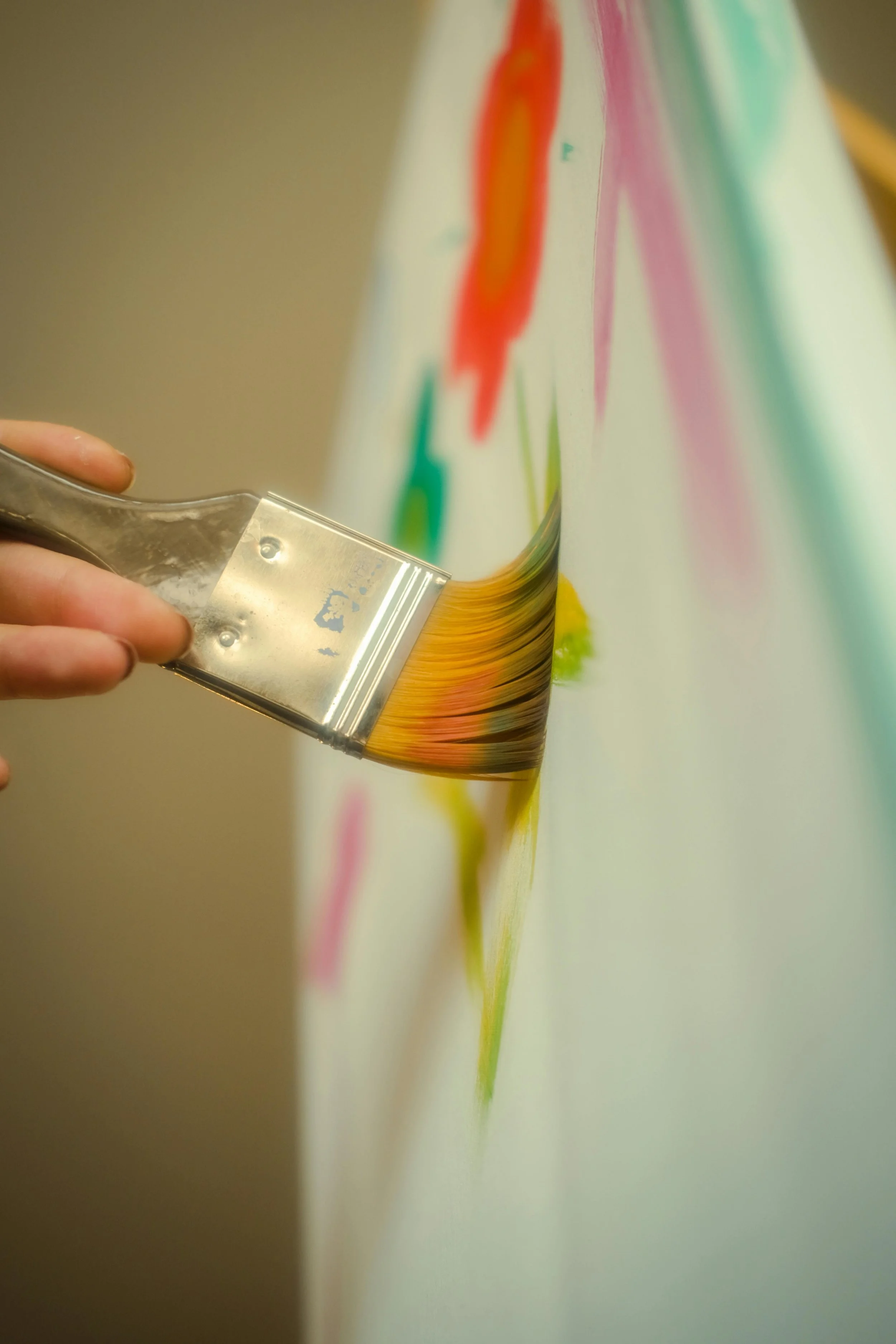
Sometimes you can't do this alone. Sometimes the burnout is so deep or the underlying issues are so complex that you need someone who understands what you're going through and can help you find your way out.
At START Creative Arts Therapy Services, we specialize in burnout recovery for creatives, artists, and anyone whose work demands more than they can sustainably give. We use Dance Movement Therapy to help you reconnect with your body, which burnout disconnects you from. Art therapy gives you ways to process and express what burnout has done to you without having to find words for it. Music therapy helps regulate your nervous system, which is stuck in overdrive.
We also use Cognitive Behavioral Therapy (CBT) to challenge the beliefs that led to burnout, like the idea that your worth is tied to your productivity or that rest is laziness. Dialectical Behavior Therapy (DBT) gives you tools for emotional regulation and distress tolerance, because burnout brings intense emotions you might not know how to handle. Internal Family Systems (IFS) helps you understand the parts of you that pushed you into burnout and what they were trying to protect you from.
This isn't about teaching you to work harder or be more resilient so you can go back to the same patterns that broke you. It's about fundamentally changing how you relate to work, rest, and yourself. It's about building a life that's sustainable instead of one that looks impressive on the outside while destroying you on the inside.
You Don't Have to Break to Prove Your Worth

Here's what you need to hear: your worth isn't measured by how much you produce. It's not determined by how busy you are or how little you sleep or how close you are to collapse. You are not more valuable because you're suffering. You are not more dedicated because you're burning out.
You're allowed to rest. You're allowed to set boundaries. You're allowed to say no. You're allowed to prioritize your health over your output. You're allowed to be a person, not a productivity machine.
And if you're already burned out, if you're already breaking, you're allowed to stop. To recover. To rebuild differently. To START over in a way that doesn't require you to sacrifice yourself.
If you're exhausted from trying to prove you're enough by working yourself into the ground, we're here. At START, we work with people who've been told that burnout is the price of success and who are learning, painfully, that it's actually the cost of ignoring yourself for too long. We help you recover, rebuild, and create a relationship with work and rest that doesn't destroy you in the process.
Because burnout isn't a badge of honor. It's a breakdown. And you deserve better than breaking just to prove you're working hard enough.
Conclusion
Ready to recover from burnout and rebuild sustainably? Contact START Creative Arts Therapy Services today. We offer virtual and in-person sessions throughout New York, with therapists who specialize in burnout recovery, creative exhaustion, and helping you build a life that doesn't require you to break. Let's work together to help you rest, recover, and START again without burning out.